Whether you’re looking to lose weight, build muscle, or simply maintain a healthy lifestyle, understanding your body’s energy needs is one of the most important steps you can take. But with so much conflicting information out there—from fad diets to complicated meal plans—it’s easy to feel overwhelmed. The truth is, sustainable progress comes down to one fundamental principle: energy balance. And the most practical way to understand that balance is by using a calorie calculator.
In this comprehensive guide, you’ll learn exactly how a calorie calculator works, how to use it effectively, and how to apply the results to reach your fitness goals. You’ll discover step-by-step instructions, real-life examples, common mistakes to avoid, and expert tips that turn numbers into actionable results. Whether you’re a beginner or someone looking to fine-tune your nutrition, this guide will help you take control of your health journey with confidence.
What Is a Calorie Calculator and Why Does It Matter?
A calorie calculator is a tool that estimates the number of calories your body needs each day based on factors like age, gender, height, weight, and activity level. At its core, it helps you determine your Total Daily Energy Expenditure (TDEE)—the total calories your body burns in a day, including everything from breathing and digestion to exercise and daily movement.
Why does this matter? Because your weight and body composition are largely influenced by how your calorie intake compares to your TDEE. If you consume more calories than you burn, you’ll gain weight. If you consume fewer, you’ll lose weight. Knowing your numbers gives you a starting point—a baseline from which you can make informed adjustments.
A good calorie calculator doesn’t just give you a number and leave you guessing. It provides a framework for understanding your unique energy needs, so you can set realistic goals and track progress over time. It’s not about restriction or obsession—it’s about awareness and intentionality.
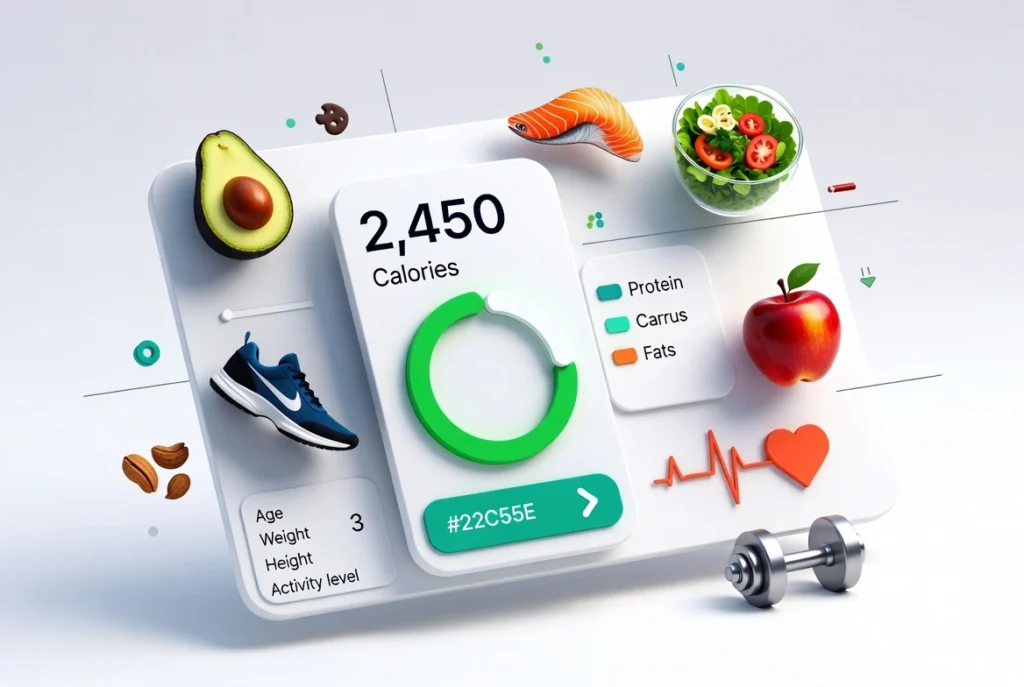
Discover your daily calories, macros, and reach your weight goals faster!
How a Calorie Calculator Works: The Science Behind the Numbers
To use a calorie calculator effectively, it helps to understand the science that powers it. Most calculators rely on established formulas that estimate your Basal Metabolic Rate (BMR) and then multiply it by an activity factor to determine TDEE.
Basal Metabolic Rate (BMR)
BMR is the number of calories your body burns at complete rest—just to keep your heart beating, lungs breathing, and organs functioning. It accounts for about 60 to 75 percent of your total daily calorie burn. Factors like age, gender, muscle mass, and genetics all influence BMR.
Two of the most common formulas used to estimate BMR are the Mifflin-St Jeor equation and the Harris-Benedict equation. The Mifflin-St Jeor is widely considered more accurate for most people and is used by many modern calorie calculators.
Activity Level Multipliers
Once BMR is calculated, it’s multiplied by a factor that reflects your typical activity level:
- Sedentary (little or no exercise): BMR × 1.2
- Lightly active (light exercise 1–3 days/week): BMR × 1.375
- Moderately active (moderate exercise 3–5 days/week): BMR × 1.55
- Very active (hard exercise 6–7 days/week): BMR × 1.725
- Extra active (very hard exercise, physical job, or training twice daily): BMR × 1.9
The result is your TDEE—the number of calories you need to maintain your current weight.
Step-by-Step Guide: How to Use a Calorie Calculator
Using a calorie calculator is straightforward, but getting accurate results requires honest inputs. Here’s a step-by-step walkthrough.
Step 1: Gather Your Basic Information
You’ll need:
- Age: Enter your current age in years.
- Gender: Select male, female, or other options depending on the calculator.
- Height: Usually in feet/inches or centimeters.
- Current Weight: In pounds or kilograms.
- Activity Level: Be honest about your typical movement and exercise habits.
Step 2: Choose Your Goal
Most calorie calculators ask what you want to achieve: weight loss, weight gain, or weight maintenance. For weight loss, the calculator will typically suggest a calorie deficit (usually 250 to 500 calories below TDEE). For weight gain, it will suggest a surplus (250 to 500 calories above TDEE).
Step 3: Enter the Data and Get Your Results
Input your details and let the calculator do the math. The results will usually show:
- Your estimated BMR
- Your TDEE (maintenance calories)
- Recommended calorie intake for your chosen goal
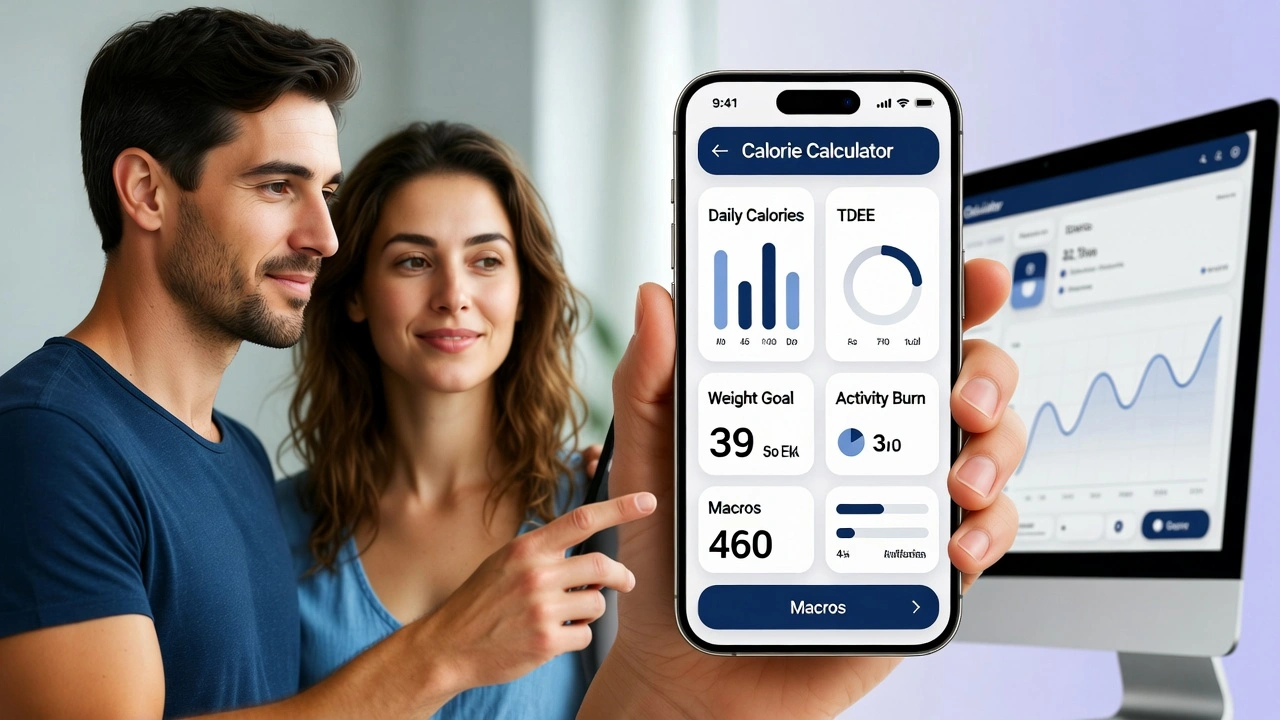
For a reliable and user-friendly experience, the Spin Numbers Calorie Calculator offers a clean interface that walks you through each step. It calculates your BMR, TDEE, and personalized calorie targets based on your goals—all without storing any personal data.
👉 Try the Spin Numbers Calorie Calculator here and get your personalized numbers in seconds.
Step 4: Apply the Numbers to Your Daily Life
Now comes the important part: using the results. Your calorie target is a starting point. You’ll need to track your food intake (using a food diary or app) and monitor how your body responds over a few weeks. Adjust as needed based on progress and how you feel.
Real-Life Examples: Using a Calorie Calculator for Different Goals
To see how a calorie calculator works in practice, let’s look at three different people with different fitness goals.
Example 1: Weight Loss Goal
Sarah is a 35-year-old woman who is 5’6″ and weighs 180 pounds. She works at a desk job but walks 3 times a week. She wants to lose about 1 pound per week.
Using a calorie calculator:
- Her BMR is estimated around 1,500 calories
- With light activity, her TDEE (maintenance) is about 2,060 calories
- To lose 1 pound per week (a deficit of 500 calories per day), her target is about 1,560 calories per day
Sarah starts tracking her food intake and finds that eating around 1,500–1,600 calories, combined with her walks, helps her lose weight steadily without feeling deprived.
Example 2: Muscle Gain Goal
James is a 24-year-old man who is 5’10” and weighs 160 pounds. He works out with weights 4 times a week and wants to build muscle. He needs to be in a calorie surplus.
Using a calorie calculator:
- His BMR is about 1,750 calories
- With moderate activity, his TDEE is about 2,710 calories
- To gain about 0.5 to 1 pound per week, he aims for 2,900–3,100 calories per day
James focuses on nutrient-dense foods and protein-rich meals, gradually increasing his intake while monitoring his strength gains and body composition.
Example 3: Weight Maintenance Goal
Maria is a 42-year-old woman who is 5’4″ and weighs 140 pounds. She does yoga twice a week and walks daily. She’s happy with her weight and just wants to maintain it.
Using a calorie calculator:
- Her BMR is about 1,350 calories
- With light activity, her TDEE is about 1,860 calories
- She aims to eat around 1,800–1,900 calories daily, adjusting based on her energy levels and weight trends
Common Mistakes When Using a Calorie Calculator
Even with accurate numbers, there are pitfalls that can derail progress. Here are the most common mistakes and how to avoid them.
Mistake 1: Overestimating Activity Level
It’s easy to think you’re more active than you really are. If you select “moderately active” when you actually sit most of the day with occasional walks, your TDEE will be inflated. This can lead to weight gain when you’re trying to maintain or lose. Be honest—it’s better to start with a conservative estimate and adjust based on real-world results.
Mistake 2: Treating the Calculator Result as Absolute Truth
A calorie calculator provides an estimate—a starting point. Individual factors like genetics, metabolic adaptations, and hormonal health can vary. Use the number as a baseline, then track your progress over 2 to 3 weeks. If you’re not seeing the expected changes, adjust your intake by 100 to 200 calories and reassess.
Mistake 3: Ignoring Food Quality
While calorie balance is key for weight change, food quality matters for health, energy, and satiety. Eating 1,800 calories of processed snacks is very different from 1,800 calories of balanced meals with protein, fiber, and healthy fats. Use your calorie target as a guide, but prioritize nutrient-dense foods.
Mistake 4: Not Recalculating After Progress
As you lose or gain weight, your calorie needs change. A calorie calculator that worked for you at 180 pounds may not be accurate at 160 pounds. Recalculate every 10 to 15 pounds or every few months to ensure your targets stay aligned with your goals.
Best Practices for Using a Calorie Calculator Effectively
To get the most out of your calorie calculator, follow these best practices.
Track Consistently for 2 to 3 Weeks
Calorie calculators provide estimates, but your body provides the ultimate feedback. Track your food intake and your weight (at the same time of day, a few times per week) for at least two weeks. Look at trends, not daily fluctuations. If your weight is moving in the right direction at a sustainable rate, you’re on track. If not, adjust.
Use a Food Diary or App for Accuracy
Most people underestimate how much they eat. Using a food diary or a tracking app for a few weeks can reveal surprising patterns. You don’t have to track forever, but a temporary tracking period gives you data to make informed adjustments.
Prioritize Protein and Fiber
Regardless of your goal, adequate protein helps preserve muscle during weight loss and supports growth during weight gain. Fiber helps with satiety and digestion. Use your calorie target as a framework, but build your meals around these key nutrients.
Be Patient and Consistent
Sustainable changes take time. Healthy weight loss is typically 0.5 to 2 pounds per week. Weight gain for muscle building is often 0.25 to 0.5 pounds per week. Consistency over weeks and months matters far more than perfection on any single day.
Security and Privacy Considerations When Using Online Calorie Calculators
Most calorie calculators are simple tools that don’t require sensitive information. However, it’s wise to be mindful of privacy.
No Personal Data Storage
Reputable calorie calculators, including the Spin Numbers Calorie Calculator, do not store your personal information. Calculations happen in your browser, and no data is saved on servers. If a calculator asks for your email or requires an account to show results, consider whether that’s necessary for your purposes.
Use HTTPS-Protected Websites
When using any online tool, ensure the website uses HTTPS (look for the padlock icon in the address bar). This ensures that any information you enter is transmitted securely.
Beware of Apps That Request Unnecessary Permissions
If you download a calorie calculator app, check the permissions it requests. A basic calculator should not need access to your contacts, location, or camera. When in doubt, stick to web-based calculators from trusted sources.
Step-by-Step: How to Incorporate Calorie Targets into Your Routine
Knowing your numbers is one thing—putting them into practice is another. Here’s a simple framework to get started.
Week 1: Establish Your Baseline
Use a calorie calculator to get your TDEE and goal target. Spend the first week simply tracking what you normally eat. Don’t try to change anything yet—just gather data. Compare your average intake to your target. You might be surprised.
Week 2: Make Small Adjustments
Based on your baseline, make one or two small changes. If you’re aiming to lose weight and your average intake is higher than your target, focus on reducing portion sizes or swapping higher-calorie foods for lower-calorie alternatives. Aim for a deficit of 250 to 500 calories per day.
Week 3 to 4: Evaluate and Refine
After two weeks of consistent tracking and adjustments, look at your progress. If you’re losing weight at a healthy rate and feel energized, you’re in the right zone. If progress is slower than expected, consider reducing intake by another 100 to 200 calories or increasing activity. If you’re losing too quickly or feeling fatigued, add back some calories.
Ongoing: Monitor and Recalculate
Continue tracking periodically, especially as your weight changes. Recalculate your calorie needs every few months or after a significant change in weight or activity level.
Advanced Insights: Beyond the Calorie Calculator
While a calorie calculator is a powerful starting point, there’s more to the picture. Here are a few advanced considerations for those looking to deepen their understanding.
Macronutrient Distribution
Calories matter, but where those calories come from also matters for body composition and performance. Many people benefit from setting protein, fat, and carbohydrate targets in addition to total calories. A common starting point is:
- Protein: 0.7 to 1.0 grams per pound of body weight (or target weight)
- Fat: 20 to 35 percent of total calories
- Carbohydrates: The remaining calories
Metabolic Adaptation
As you lose weight, your body may adapt by lowering its metabolic rate. This is a normal response. If you hit a plateau, a diet break (eating at maintenance for a week or two) can help reset before resuming a deficit.
Individual Variability
Some people may need more or fewer calories than a calculator suggests due to genetics, medical conditions, or medications. If you’re consistently following your numbers but not seeing results, consider consulting a registered dietitian or healthcare provider for personalized guidance.
FAQs About Calorie Calculators
1. How accurate are calorie calculators?
Calorie calculators provide estimates based on population averages. They are excellent starting points, but individual results can vary. Factors like genetics, muscle mass, and metabolic health can influence your actual needs. Use the calculator as a baseline and adjust based on real-world results over 2 to 3 weeks.
2. Do I need to track calories forever?
Not necessarily. Many people use calorie tracking temporarily to build awareness and learn appropriate portion sizes. Once you develop a good sense of how much to eat for your goals, you may choose to track periodically or rely on other methods like mindful eating or portion control.
3. Can I use a calorie calculator if I’m pregnant or breastfeeding?
Calorie needs increase during pregnancy and breastfeeding, but standard calculators are not designed for this. It’s best to consult your healthcare provider or a registered dietitian for personalized guidance during these stages.
4. What’s the difference between BMR and TDEE?
BMR (Basal Metabolic Rate) is the calories your body burns at complete rest. TDEE (Total Daily Energy Expenditure) is BMR plus all additional energy burned through activity, exercise, and digestion. TDEE is the number you use to determine your calorie intake for maintenance, loss, or gain.
5. How often should I recalculate my calorie needs?
Recalculate every 10 to 15 pounds of weight change, or every few months. As your body composition changes, so do your energy requirements.
6. Is it safe to eat below my BMR for weight loss?
Eating below your BMR for extended periods can lead to muscle loss, fatigue, and nutritional deficiencies. Most experts recommend a moderate deficit of 250 to 500 calories below TDEE, which typically keeps intake above BMR. If you’re unsure, consult a healthcare professional.
7. Can I use a calorie calculator for weight gain?
Absolutely. For weight gain, the calculator will suggest a surplus above your TDEE. Focus on nutrient-dense, calorie-rich foods and combine with resistance training to promote lean muscle gain rather than excess fat.
8. Are online calorie calculators private and secure?
Most reputable calculators do not store your data. The Spin Numbers Calorie Calculator, for example, performs all calculations in your browser without saving any information. Always look for HTTPS websites and avoid tools that ask for unnecessary personal details.
Conclusion: Take Control of Your Health with a Calorie Calculator
A calorie calculator is more than just a number generator—it’s a tool that empowers you to make informed decisions about your nutrition and fitness. By understanding your energy needs, setting realistic goals, and tracking your progress, you can move away from guesswork and toward sustainable, lasting results.
Whether your goal is weight loss, muscle gain, or simply maintaining a healthy lifestyle, the principles are the same: know your numbers, fuel your body with quality foods, stay consistent, and adjust as needed. A calorie calculator gives you the starting point, but your own observations and patience will guide the journey.
Remember that health is about more than numbers on a scale. Energy levels, mood, strength, and how your clothes fit are all valuable indicators of progress. Use your calorie calculator as a trusted companion—not a rigid rulebook—and you’ll be well on your way to reaching your fitness goals with confidence and clarity.
Ready to get started? Try the Spin Numbers Calorie Calculator to get your personalized numbers and take the first step toward a healthier, more informed you.