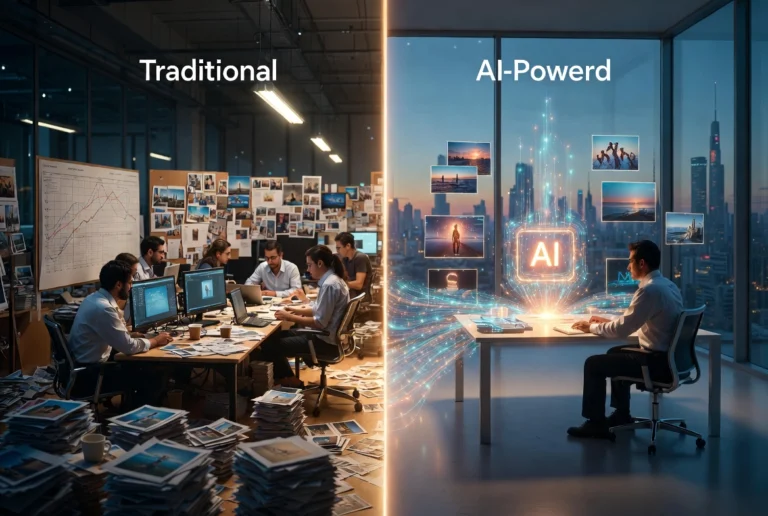
Last month, a small e-commerce owner told me she saved $3,000 on product photography by using an AI image generator instead. This month, she is worried someone might steal those same images because she does not actually own the copyright. Her story is not unique. Businesses are rushing to adopt AI visuals, but many do not understand the risks.
This guide does not give a simple yes or no answer. Instead, it walks through what is working, what is risky, and where the law currently stands. Whether you run a marketing agency, an online store, or a local service business, you will leave with a practical framework for deciding when and how to use AI-generated images on your website.
What Actually Happens When You Generate an AI Image
Here is what most people do not realize. When you type a prompt into an AI image generator, the tool does not create something from nothing. It has been trained on billions of existing images scraped from the internet. Those images include copyrighted artwork, stock photos, and personal photographs. Whether that training is legal is currently being decided in courtrooms across the country.
This matters for your business because if the training data was used without permission, the legal status of every image you generate could be challenged. No court has given a definitive answer yet. That uncertainty is the real risk, not the technology itself.
Where AI Images Actually Work Well (Real Examples)
Instead of generalities, here are specific use cases where businesses are finding success with AI-generated visuals.
Case Study: SaaS Blog Illustrations
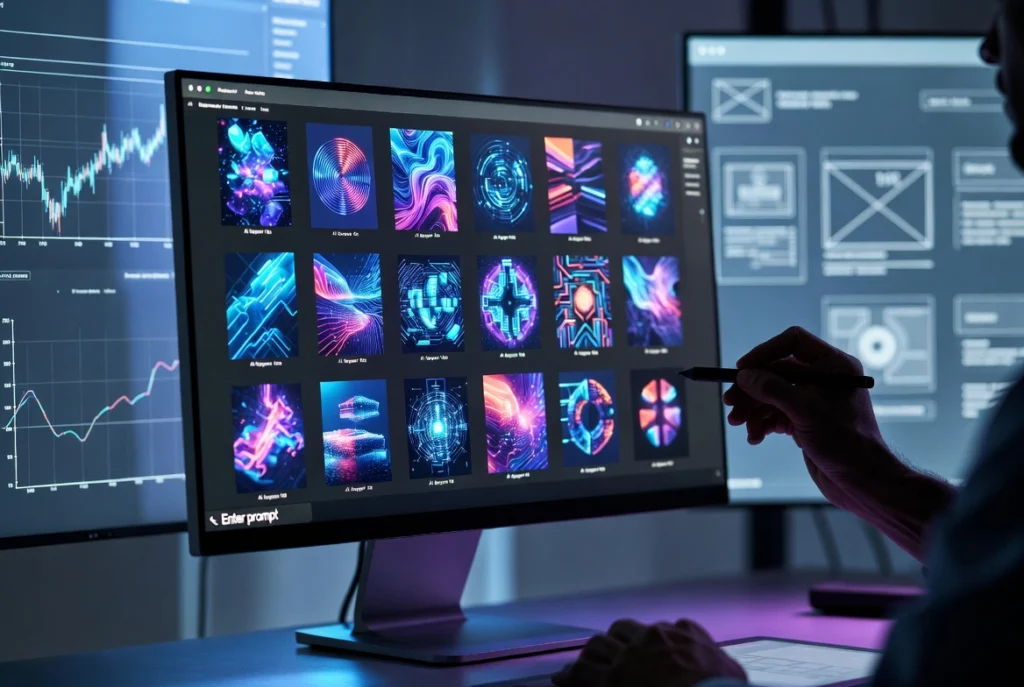
A B2B software company replaced generic stock photos of “people shaking hands in conference rooms” with AI-generated abstract illustrations for their blog posts. Some businesses report improved engagement when replacing generic stock photos with more customized AI visuals. The abstract style matched their brand, and no one mistook the images for real photographs. The AI tool cost $30 per month. Their previous stock photo budget was $500 per month.
Case Study: E-commerce Lifestyle Shots
A small jewelry brand used an AI image generator to create lifestyle images showing their products in different settings. They did not use AI for the product photos themselves, which remained real photographs. The AI-generated backgrounds allowed them to create seasonal campaigns without expensive photoshoots. They added a small disclaimer: “Background generated with AI.” Customers did not mind.
Case Study: Real Estate Virtual Staging
A real estate agent used AI to virtually stage an empty living room. The listing clearly stated “virtually staged.” The home sold faster than comparable listings. The agent did not use AI for the kitchen or bathroom photos, only for the living room. This hybrid approach worked well.
Where AI Images Can Backfire (Real Examples)
Here are cautionary tales from businesses that learned the hard way.
A Luxury Brand That Lost Trust
A high-end furniture company used AI-generated lifestyle images showing their products in beautiful rooms. Customers noticed that the room dimensions were physically impossible. A sofa appeared to float. Shadows did not align. The comments section filled with mockery. The brand removed the images and issued an apology. The lesson: luxury brands, in particular, cannot afford obvious AI artifacts.
A Law Firm That Took Legal Advice
A personal injury law firm considered using AI-generated images of “happy clients” on their website. Their legal counsel advised against it. The risk of misleading potential clients was too high. They stuck with real client photos (with permission) and professional headshots. The firm still uses AI for internal presentations and social media graphics, but not for client-facing images.
The Legal Reality (Not Absolute, Nuanced)
Let us be precise about what is actually known versus what is still uncertain.
What Is Clear
The US Copyright Office has stated that images generated entirely by AI with no human creative input are not eligible for copyright protection. This means you cannot stop others from copying those exact images. Several courts have agreed with this position in preliminary rulings.
What Is Not Clear
Whether AI training on copyrighted images violates copyright law is still being litigated. Multiple class-action lawsuits are pending. Until courts issue final rulings, the legal status of AI-generated images remains uncertain. Some legal experts believe the technology companies will prevail under fair use doctrines. Others believe artists will win. No one knows for certain.
Importantly, the legal landscape varies by country. The UK and European Union are taking different approaches than the United States. If your business operates internationally, you need to consider multiple legal frameworks.
Decision Framework for Business Owners
Instead of absolute rules, here is a framework for making your own decision based on your specific situation.
When AI Images Are Lower Risk
- Internal presentations and pitch decks
- Brainstorming and mood boards
- Social media graphics (where the image is not your core brand asset)
- Blog post illustrations (especially abstract or conceptual)
- Seasonal or temporary campaigns
- A/B testing different visual directions
When AI Images Are Higher Risk
- Product photography (customers expect accuracy)
- Real estate listings (legal disclosure requirements vary by state)
- Healthcare and medical marketing (high trust industry)
- Legal and financial services (regulatory scrutiny)
- Core brand assets (logo, hero images, brand identity)
- Any image that could be considered misleading or deceptive
Our Take (Informed Opinion, Not Absolute Truth)
After researching this topic extensively and speaking with legal experts, here is our considered opinion. Businesses should treat AI images as supplemental creative assets, not as replacements for core brand photography. The cost savings are real, but so are the legal uncertainties and authenticity concerns.
The smartest approach is hybrid. Use professional photography or licensed stock images for your most important brand assets. Use AI-generated visuals for supporting content like blog illustrations, social media graphics, and internal presentations. Document your use of AI tools. Add human editing to strengthen any potential copyright claim. Stay informed about legal developments, which are changing rapidly.
Avoid using AI images in industries where authenticity is critical: healthcare, legal services, real estate, and high-end retail. In these sectors, the trust you lose from obvious AI artifacts is not worth the cost savings.
Comparison Table: AI Images vs Stock Photos vs Custom Photography
| Factor | AI Images | Stock Photos | Custom Photography |
|---|---|---|---|
| Cost | Very low ($10-50/month) | Low to moderate ($100-500/year) | High ($1,000-10,000+) |
| Speed | Seconds to minutes | Minutes to hours (search time) | Days to weeks |
| Uniqueness | High (custom prompts) | Low (used by many) | Very high (exclusive) |
| Copyright Protection | Uncertain / Limited | Clear (license-based) | Full (business owns) |
| Legal Risk | Moderate to High | Low (if licensed properly) | Very Low |
| Authenticity | Low (often detectable) | Medium (depends on image) | High |
| Best For | Blogs, social, internal use | General marketing, non-critical visuals | Core brand, products, team photos |
Practical Tips for Using AI Images Responsibly
If you decide to use AI-generated visuals, here is how to minimize risk and maximize quality.
Always Edit the Output
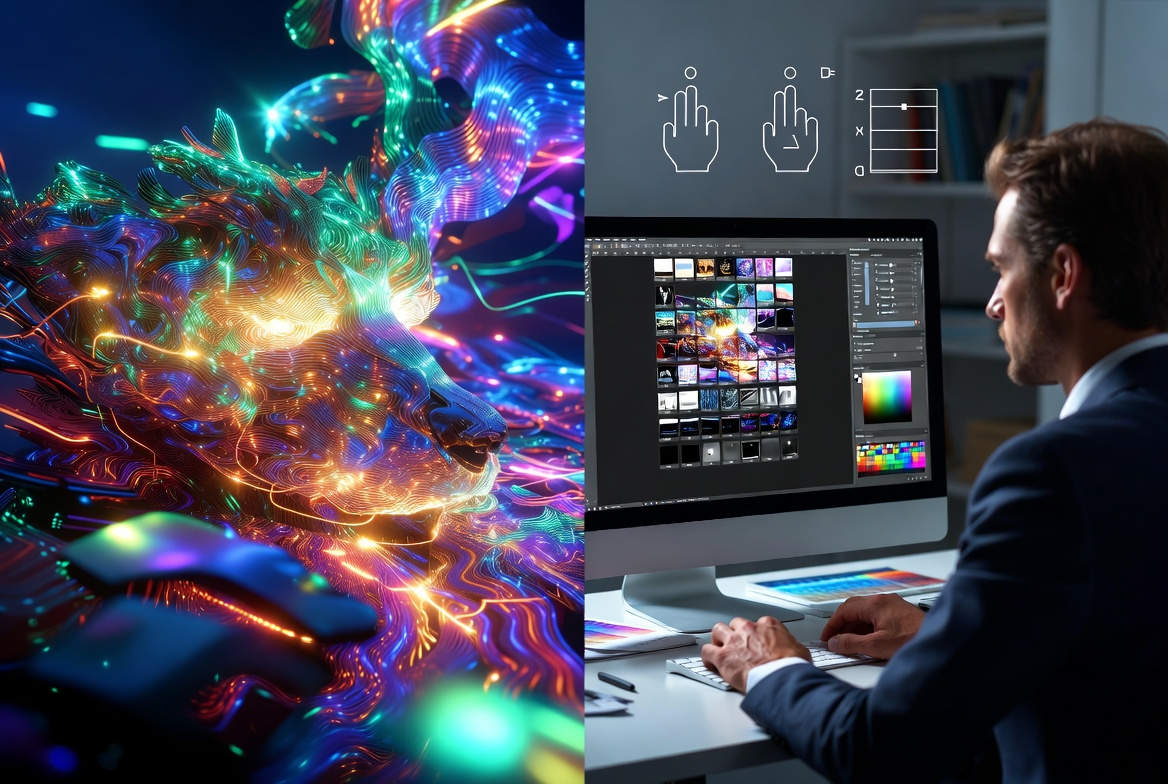
Do not use raw AI outputs. Bring the image into Photoshop, Canva, or another editing tool. Add your brand colors, overlay text, combine multiple generations, or incorporate real photography. This human editing strengthens any potential copyright claim and makes the image more distinctive.
Keep Detailed Records
Save the prompts you used, the tool version, and the date of generation. Document your editing process. If you ever need to defend your usage, this documentation is valuable evidence.
Add a Small Disclaimer for Sensitive Uses
For images where authenticity matters, consider adding a small disclaimer: “Image generated with AI” in the caption or alt text. This builds trust with customers who value transparency and may become legally required in the future.
Choose Tools with Clear Commercial Terms
Read the terms of service carefully before using any AI image generator. Some tools grant full commercial rights, while others impose restrictions. Adobe Firefly, trained on licensed and public domain content, is often viewed as one of the safer commercial options for businesses due to its training approach.
Frequently Asked Questions
1. Can competitors legally copy my AI-generated images?
They may be able to, depending on how much human editing you added and the current legal guidance in your jurisdiction. Pure AI outputs without human input likely have no copyright protection. Heavily edited images may have partial protection. This area of law is evolving, so consult an attorney for specific situations.
2. Which AI image generator is safest for business use?
Adobe Firefly is currently the safest option because it was trained on licensed Adobe Stock images and public domain content. Other tools like DALL-E and Midjourney have pending lawsuits regarding their training data. However, no tool offers complete legal certainty at this time.
3. Do I need to disclose that an image was AI-generated?
Not yet in most jurisdictions, but some states are considering disclosure laws. For certain industries like real estate, disclosure may already be required under existing deceptive trade practices laws. When in doubt, disclose.
4. Can I use AI images for product photos?
Generally not recommended. Customers expect accurate product representations. Using AI-generated product images could lead to returns, complaints, and potential legal liability for false advertising.
5. What happens if the AI tool gets sued?
If the company behind your AI tool loses a lawsuit, the legal status of all images generated by that tool could be challenged. This is a real risk. Diversifying your image sources is one way to mitigate it.
Conclusion: A Practical Path Forward
AI image generators are powerful tools, but they are not magic. They come with real legal risks, authenticity concerns, and ethical questions. The businesses that succeed with AI images are not the ones that replace all their photography. They are the ones that use AI strategically for low-risk applications while maintaining professional photography for high-stakes brand assets.
Start small. Use an AI image generator for a blog post or a social media graphic. See how it performs. Learn the tools. Stay informed about legal developments. And always remember that in business, trust is your most valuable asset. Do not trade it for a few dollars saved on photography.
Want more about images? Check out our Image section for guides on optimizing, compressing, resizing images, understanding aspect ratios, and removing backgrounds.