By Spin Numbers · Last Update June 2026 · 10 minute read
A random number generator wheel combines two things that a basic number tool does not offer: a defined range and a visible selection process. You set the maximum, choose how many numbers to draw, and watch the wheel spin to each result one at a time. The random number generator wheel is not just a faster way to pick a number. It is a way to make the selection process transparent to everyone watching.
In group settings such as raffles, classroom draws, and team assignments, the spinning animation creates a shared moment. Everyone watches the same result arrive at the same time, which is what makes outcomes feel genuinely fair rather than simply announced. This guide covers exactly how the tool works, what each setting does, and which situations it handles better than alternative randomization methods.
Table of Contents
How the Random Number Generator Wheel Works
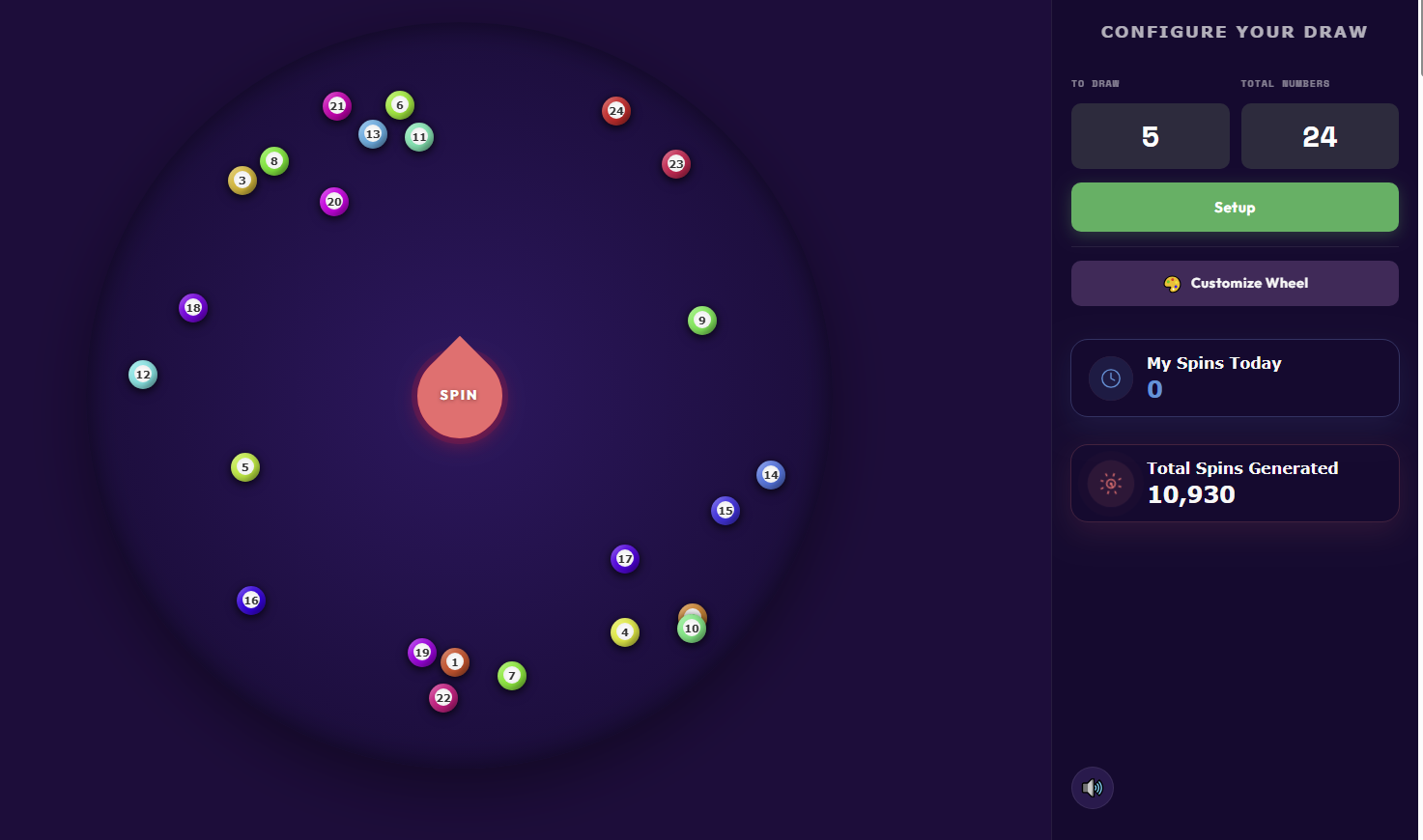
When you click setup, the wheel is prepared with numbers from 1 to your chosen maximum. When you click spin, a pseudo-random number generator (PRNG) selects the outcome before the animation begins. The wheel rotates and decelerates to land on the pre-determined result. The animation is a visual representation of a decision that has already been made, not a process still unfolding.
Each number in the defined range has exactly equal probability of being selected on every spin. No position on the wheel carries more or less probability than any other, regardless of where the wheel starts or how fast it spins.
When drawing multiple numbers, the wheel selects distinct values. No number appears twice in the same session. This matters for raffles and group assignments where unique results are required. If a draw requires that every participant can only win once, the wheel handles this automatically without any manual tracking.
For game mechanics where repeated values are acceptable, such as simulating dice rolls where the same number can appear on consecutive rolls, a dedicated dice roller is more appropriate. For selection tasks where uniqueness matters, the random number generator wheel is the correct tool.
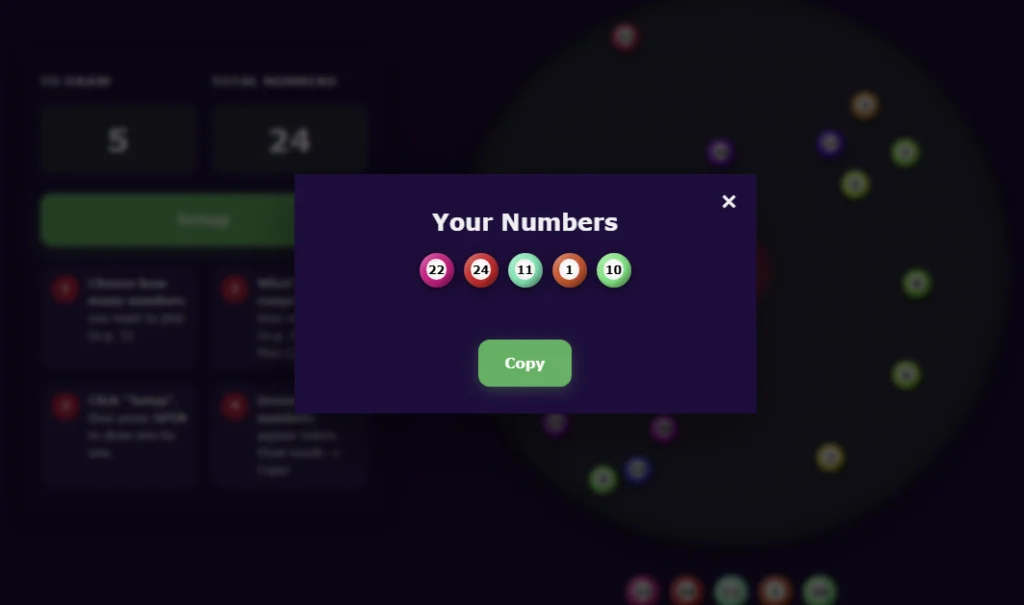
The Spinumbers random number generator wheel supports ranges up to 200 and draws multiple numbers in sequence. Each drawn number appears below the wheel as it is selected, and a copy button captures the complete list when the draw is finished.
What Each Setting Actually Does
Understanding what the settings control prevents the most common errors when using the wheel in a live group setting.
Maximum number defines the upper bound of your range. Set this to match your pool exactly: 30 for a class of 30 students, 90 for a raffle with 90 tickets, 50 for a list of 50 questions. The range always begins at 1, so the maximum is the only variable you need to set. If your pool has 47 participants, set the maximum to 47. Setting it higher than your actual pool creates numbers that cannot be matched to any participant.
Number of picks determines how many distinct numbers the wheel draws in sequence. Set this to 1 for a single selection, or higher for raffles with multiple winners, group formations, or any situation requiring several random results from the same pool. Each pick is drawn one at a time with the full animation, which builds anticipation between results in a way that a pre-generated list cannot replicate.
Setup prepares the wheel with your current settings. Always click setup after changing either parameter. Spinning without clicking setup first will use the previous configuration, which is the most common error in live settings. Confirm your settings are correct and visible on screen before the first spin.
Copy captures the complete list of drawn numbers to your clipboard. Use this immediately after the final draw. The results exist only in the current browser session, and a page refresh clears them entirely. Copy and paste into a document before navigating anywhere.
Where a Random Number Generator Wheel Works Better Than Alternatives
Different random selection tools serve different purposes. Knowing which one fits which situation prevents using the wrong tool and then questioning whether the results were actually fair.
Random number generator wheel vs. basic number generator
A basic generator produces an instant result with no animation. This is faster for private, single-use decisions where no one else is watching and the result only needs to be correct, not witnessed.
The wheel is better when the selection happens in front of a group. The animation creates shared anticipation and makes the outcome feel witnessed rather than declared. A result that a group watches arrive is accepted more readily than a result that is announced after the fact, even when both results came from equally random processes.
Random number generator wheel vs. physical draw
Drawing from a container is familiar and requires no technology, but it scales poorly. Drawing ten winners from a pool of ninety tickets requires ninety slips of paper, careful handling to prevent duplicates, a container large enough to mix them properly, and someone to manage the physical process in front of an audience.
The wheel handles this in under two minutes. The range is set, the picks are configured, and the draw runs sequentially with a copy-ready list at the end. For any pool larger than twenty or thirty, the wheel is significantly more practical than a physical alternative. Our guide on how to run a fair raffle or giveaway covers the full process of combining a number wheel with a participant record for a complete, verifiable draw.
Random number generator wheel vs. dice
Standard dice have fixed ranges. A six-sided die gives 1 to 6. A twenty-sided die gives 1 to 20. A number wheel gives any range up to 200, which covers most real-world selection needs that standard dice cannot reach.
For game mechanics specifically designed around standard dice types, a dedicated dice roller is still the right tool because it replicates the exact ranges and repetition rules of physical dice. For classroom draws, raffles, and assignments where the range is defined by your participant count rather than a game format, the wheel is significantly more flexible.
Practical Applications by Context
Raffles and prize draws
Set the maximum to the number of tickets in your raffle. Set picks to the number of winners. Display the wheel on a shared screen so all participants watch each spin. The sequential draw, one number at a time with the full animation, builds anticipation between winners in a way that announcing a pre-generated list cannot.
For larger raffles where tickets are numbered non-sequentially, the wheel selects positions within your range and you match those positions to your ticket list after the draw. Create a numbered index of your ticket list before the event, set the wheel to the total count, and cross-reference the drawn numbers to the index after the draw is complete.
Classroom number draws
Assign each student a number at the start of the term and keep that assignment consistent across the year. Set the wheel maximum to your class size. Spin to select students for questions, presentations, activities, or group assignments.
The numbered system is faster than a name wheel in classrooms where you already have a seating chart or numbered roster. There is no need to re-enter names at the start of each lesson. Set the maximum once, and the same configuration applies every session. For a complete guide to implementing random selection consistently in a classroom context, our article on how random name selection works in the classroom covers both numbered and name-based approaches with their respective trade-offs.
Sequential question selection
For review games, trivia sessions, or any activity with a numbered question list, set the wheel to the total number of questions and spin before each round. This prevents predictable question order and stops participants from front-loading preparation toward questions they expect to appear early.
For a 40-question review session, set the maximum to 40 and picks to however many questions you plan to use. The wheel draws them in a random sequence that no participant can anticipate.
Random assignment within defined groups
When participants have already been divided into teams but roles within those groups need to be assigned randomly, set the wheel to the number of roles and draw one number per participant. This distributes responsibilities such as team leader, recorder, and presenter without the social friction of asking for volunteers or making visible judgment calls about who is suited for which role.
Research and study design
For basic random assignment in student research projects or informal studies, assign each participant a number and use the wheel to draw the control group. Remaining participants form the experimental group. The wheel provides a transparent, reproducible assignment method that satisfies basic random assignment requirements for non-clinical research contexts. The copy function produces a record of the draw that can be included in the methodology section of a project report.
Getting Consistent Results in Live Settings
A few practical habits prevent the most common errors when using the random number generator wheel in front of a group.
Run a test draw before the live event. Confirm the range and pick count are correct before going live. Discovering a settings error mid-raffle in front of an audience creates confusion that a 60-second test beforehand would have prevented. Verify the maximum matches your pool and the pick count matches your number of winners.
Copy results before navigating away. The drawn numbers exist only in the current browser session. A page refresh clears them. Click copy immediately after the final draw and paste into a document before doing anything else. For raffles, paste the results into your participant record spreadsheet immediately.
Display the wheel on a shared screen for group events. The transparency value of the wheel comes from everyone watching the same spin. If only the organizer sees the result and announces it afterward, the wheel offers no advantage over generating numbers privately. Display it on a projector, classroom screen, or shared video call screen.
Draw numbers one at a time and allow each animation to complete. The wheel draws sequentially by design. The pauses between individual draws are part of what makes the process engaging for a watching group. Rushing through spins reduces the shared anticipation that makes the outcome feel witnessed rather than processed.
Match the range to your pool exactly. If your pool has 63 participants and you set the maximum to 70, numbers 64 through 70 will appear in the draw but cannot be matched to any participant. This forces a re-draw and raises questions about whether the process was managed correctly. Set the maximum to 63.
Random Number Generator Wheel vs. Other Tools: Quick Reference
| Tool | Best for | Range | Unique draws | Visible process |
|---|---|---|---|---|
| Random number generator wheel | Raffles, classroom draws, group assignments | 1 to 200 | Yes | Yes |
| Basic number generator | Private, single-use decisions | Any | Optional | No |
| Dice roller | Game mechanics with standard dice ranges | Fixed by dice type | No | Yes |
| Spinner wheel | Named options, categories, names | Named segments | Optional | Yes |
| Physical draw | Small in-person draws under 20 | Limited by pool | Yes | Yes |
Frequently Asked Questions
What is the maximum range the random number generator wheel supports?
The wheel supports any custom maximum range up to 200. This covers the vast majority of real-world use cases including classroom rosters, standard raffle pools, question lists, and group assignment pools. For pools larger than 200, a spreadsheet-based random selection with a documented formula is more appropriate and produces a verifiable record.
Does the wheel repeat numbers in the same draw?
No. When drawing multiple numbers in a single session, the wheel operates on a sampling-without-replacement model. Each number that has been drawn is excluded from subsequent spins in that session. This makes the tool statistically appropriate for any situation where unique results are required, such as selecting raffle winners or assigning participants to groups.
What happens if I change settings after clicking setup?
If you adjust either the maximum or the pick count after clicking setup, you must click setup again before spinning. Spinning without reconfiguring after a settings change will use the previous parameters. Always confirm the correct settings are active on screen before the first spin in a live group setting.
Can I use the wheel for a raffle with non-sequential ticket numbers?
Yes, using an index approach. Before the draw, create a numbered index that maps your non-sequential ticket numbers to sequential positions (ticket A to position 1, ticket B to position 2, and so on). Set the wheel maximum to the total count of tickets. After the draw, cross-reference the drawn positions to your index to identify the winning tickets.
Does the random number generator wheel work on mobile?
Yes. The wheel is built for responsive web standards and functions on iOS and Android devices through any modern mobile browser without installation. For live events where you need to display results on a large screen while operating the tool from a phone or tablet, test the layout on your specific device before the event.
Is the tool free to use?
Yes. The random number generator wheel at Spinumbers is free to use with no account required, no registration, and no usage limits for standard draws. Navigate to the tool, enter your settings, click setup, and begin spinning immediately.
Conclusion
A random number generator wheel is the right tool when two conditions are both true: you need a number from a defined range, and the selection should be visible to the people it affects.
For private, single-use decisions, a basic number generator is faster. For game mechanics with standard dice ranges, a dice roller is more appropriate. For raffles, classroom draws, group assignments, sequential question selection, and any other situation where a defined range and a visible draw both matter, the random number generator wheel handles it efficiently and transparently.
The combination of genuine statistical randomness and a visible spinning process is what makes the tool more than a number generator. It is a way to produce outcomes that the people affected by them can watch arrive, which is the foundation of accepted and trusted results in any group setting.
References
Lind, E. A., & Tyler, T. R. (1988). The social psychology of procedural justice. Plenum Press.
Nickerson, R. S. (2002). The production and perception of randomness. Psychological Review, 109(2), 330-357.
https://doi.org/10.1037/0033-295X.109.2.330
Tversky, A., & Kahneman, D. (1974). Judgment under uncertainty: Heuristics and biases. Science, 185(4157), 1124-1131.
https://doi.org/10.1126/science.185.4157.1124
Wagenaar, W. A. (1972). Generation of random sequences by human subjects: A critical survey of literature. Psychological Bulletin, 77(1), 65-72.
https://doi.org/10.1037/h0032060