By Spin Numbers · Last Update June 2026 · 11 minute read
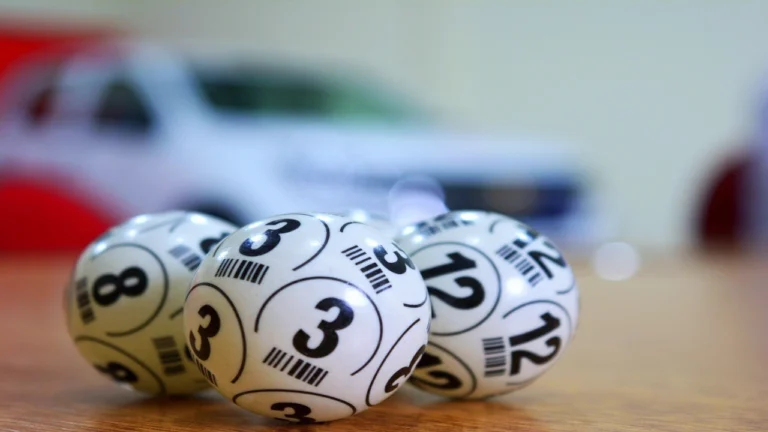
Why humans are bad at random becomes obvious the moment someone asks you to pick a number between 1 and 10. Most people say 7. Not because it is the most statistically likely choice, but because it feels random. That single example reveals something important about how the human brain works: people do not generate randomness. They simulate what they believe randomness looks like, which is an entirely different thing.
This distinction matters far beyond number-guessing games. Why humans are bad at random affects how teachers select students, how researchers build samples, how players compete, and how organizations make decisions they believe are fair but are not. Understanding the mechanism behind this failure is the first step toward knowing when to stop trusting your own judgment and start using a system instead.
Table of Contents
The Research Behind Human Randomness Failure
The evidence on human randomness failure is extensive, consistent, and spans decades of psychological research.
Psychologist William Wagenaar conducted landmark studies in the 1970s and 1980s asking participants to generate random sequences of numbers and letters. His findings were consistent: people systematically avoid repetition, alternate too frequently between options, and cluster choices around values that feel unpredictable rather than values that are statistically independent.
In true randomness, streaks occur naturally. If you flip a fair coin 100 times, you will encounter runs of five or six heads in a row. This is mathematically expected. But humans producing what they believe to be random sequences eliminate these streaks because streaks feel wrong. The result is a sequence that is far too alternating to be genuinely random, which makes it far more predictable than the person generating it realizes.
The number 7 example is well documented across multiple studies. When asked to choose a number between 1 and 10, people systematically avoid the boundaries (1 and 10) and the exact middle (5). Even numbers are often dismissed as feeling too structured. Among the remaining options, 7 stands out because it is a prime number, culturally associated with luck, and feels conceptually isolated from its neighbors. The result is that 7 is chosen far more often than the 10 percent probability it would receive in a genuinely random process. In some studies, it is chosen by more than 30 percent of participants.

Why the Brain Cannot Generate True Randomness
The brain is a pattern-recognition system. Its primary function is to find order, anticipate outcomes, and reduce uncertainty. This capacity is one of the most powerful and adaptive features of human cognition. It is also fundamentally incompatible with generating randomness.
When asked to produce a random sequence, the brain evaluates each choice based on what the previous choices looked like. It asks, in effect, whether the next choice will make the sequence look sufficiently random. This evaluation introduces bias at every step because randomness is being assessed through pattern recognition rather than generated independently of prior choices.
True randomness has no memory. Each outcome is statistically independent of every previous outcome. A fair coin has no knowledge of the last ten flips. The brain cannot operate this way because its architecture is built on memory and pattern recognition. Every choice a person makes is influenced by the choices they have already made, which means genuine independence between selections is structurally impossible for human cognition.
This is not a failure of intelligence or effort. It is a fundamental mismatch between what randomness requires and what the brain is built to do.
Where This Matters in Practice
Games and competitions
In games like rock-paper-scissors, both players believe they are being unpredictable. In practice, both follow patterns. After losing a round with rock, most players switch to scissors or paper rather than playing rock again, even though repetition is as valid a random choice as switching. Skilled players exploit this tendency deliberately, predicting transitions based on the outcomes of previous rounds.
Research on rock-paper-scissors tournament data has shown that players who have just won tend to repeat their winning move, while players who have just lost tend to switch. These are predictable patterns in a game that is supposed to be purely random. A genuinely random player, using a digital randomizer to select their move, would be unbeatable over time because their choices would have no exploitable pattern.
Shuffling and selection
When people shuffle physical cards or select items from a list, they introduce systematic bias. Items at the edges of lists are avoided. Items near the middle are selected more often. After a shuffle, cards remain partially ordered because people do not apply enough physical disruption to achieve statistical independence between positions.
A practical test confirms this: ask a teacher to randomly select student names from a class list over 20 lessons, without any tool, and track the distribution. Certain names will appear consistently more often than others, even when the teacher believes they are being fair. The same test run with a digital random selector produces a distribution that converges toward equal probability across all names over the same period.
For teachers specifically, this has direct consequences for student participation equity. Our article on cold calling in the classroom and why random selection works better covers the research on teacher selection bias in detail.
Research and sampling
In scientific research, human-selected samples are not random samples. When researchers manually select participants, cases, or data points, unconscious preferences shape the selection in ways the researcher typically cannot detect or correct for.
This is why rigorous research methodology requires documented randomization procedures rather than researcher discretion. The problem is not that researchers are dishonest. It is that the human brain cannot select without introducing the patterns it was designed to recognize.
Security and passwords
Human-generated passwords follow predictable patterns even when users believe they are being creative. Common patterns include capitalizing the first letter, placing numbers at the end, substituting specific letters with numbers (a becomes 4, e becomes 3), and using personally meaningful information like birth years or names.
Studies on leaked password databases consistently show that these patterns are widespread and exploitable. Users who believe they have created a complex, unpredictable password have often created one that follows patterns shared by millions of other users making similar choices for the same psychological reasons.
Common Mistakes People Make When Trying to Be Random
Understanding why humans are bad at random helps identify the specific errors that appear most consistently when people attempt to generate random sequences.
Avoiding repetition entirely. People remove streaks because they feel wrong. In a genuinely random sequence of coin flips, runs of five or six in a row are expected and normal. Human-generated sequences contain far fewer long runs than statistical probability predicts, making them identifiable as human-produced even without knowing the source.
Over-alternating between options. Rather than allowing natural distribution, people force variation in a way that creates a predictable alternating pattern. A sequence that switches between two options too regularly is actually less random than one that occasionally clusters on the same option several times in a row.
Relying on intuition about what randomness looks like. People choose what feels random rather than what is statistically independent. The feeling of randomness and the fact of randomness are different things, and human intuition consistently confuses them.
Trying harder to be random, which makes things worse. The more conscious effort a person applies to generating a random sequence, the more their pattern-recognition system engages with the task, which increases rather than decreases the systematic bias in the output.
A Real-Life Example That Makes the Problem Visible
Consider a teacher who calls on students from a class of 25 without any tool, believing the process is fair. Over 20 lessons, she tracks which students she called on. The distribution shows that 6 students were called on 3 or more times each, while 4 students were never called on at all. She was surprised. She had no intention of creating this pattern. The pattern emerged anyway because her selections were influenced by previous choices, seating position, eye contact, and the memory of recent participation.
When the same teacher uses a digital random selector for the following 20 lessons, the distribution converges toward equal frequency across all 25 students, with natural variation but no student appearing at zero or at a frequency three times higher than average.
This difference becomes visible only when tracked over time, which is why human selection bias often goes unnoticed. The bias feels fair in the moment because the teacher is not conscious of the pattern. The data tells a different story.
Why Something Feels Random but Is Not
Humans associate randomness with irregularity and surprise. A sequence that looks uneven, unpatterned, and non-repetitive feels more random than one that contains repetition or clustering.
But true randomness frequently contains patterns. A run of five consecutive heads in a coin flip sequence is not evidence that the coin is biased. It is a statistically expected event in a long sequence of independent flips. A random selection of names from a class list will occasionally produce the same name twice in a row. Both of these outcomes feel wrong to human observers, which leads people to doubt genuinely random systems while trusting their own biased selections.
This mismatch between what randomness feels like and what it actually produces is the source of most human randomness errors. People correct for streaks that do not need correcting, introduce alternation that creates false patterns, and produce sequences that feel more random than they are while being statistically less random.
The Practical Implication: When to Stop Choosing
Knowing that human randomness is predictably flawed leads to a clear practical rule: when genuine unpredictability or statistical fairness is required, remove human choice from the selection process and replace it with a system.
This applies to classroom participation selection, research sampling, game strategy, security systems, and any decision where fairness depends on equal probability rather than perceived fairness. The situations are broader than most people assume.
A useful distinction: use human judgment for decisions that benefit from experience, context, and nuanced evaluation. Use a random system for selections that require statistical independence and equal probability. These are different tasks requiring different tools.
For decisions where cognitive fatigue is also a factor, our article on decision fatigue and why it gets harder to choose as the day goes on explains how the brain’s capacity for judgment degrades across a day, which compounds the randomness problem when decisions are made late in a working session.
An Interesting Side Effect: Using Human Bias Deliberately
Human randomness failure is not always a problem. In some contexts, it is genuinely useful.
When someone is asked to pick a random number and chooses 7, that choice is not random, but it is revealing. It reflects the person’s pattern of associations, cultural background, and cognitive tendencies. This is why number-choice tasks appear in psychology experiments, not to measure randomness but to measure the predictable structure of human intuition.
Similarly, human selection patterns in creative contexts such as choosing colors, arranging objects, or designing sequences often produce outputs that feel more aesthetically satisfying than genuinely random ones precisely because they reflect the pattern preferences of the human making them. Random is not always better. It is only better when the specific requirement is statistical independence and equal probability.
How Random Tools Actually Work
Understanding why humans are bad at random raises a natural question: how do digital random tools avoid the same problem?
Digital random number generators use algorithms called pseudo-random number generators (PRNGs), which produce sequences that pass statistical tests for randomness even though they are generated deterministically from a starting seed value. The seed is typically drawn from unpredictable system inputs such as the current time in milliseconds or hardware noise, which means the sequence cannot be predicted in advance.
For most practical applications, such as classroom selection, giveaway draws, and game decisions, PRNG-based tools produce results that are functionally indistinguishable from true randomness. Each outcome is statistically independent of previous ones, position bias is absent, and the distribution across all options converges toward equal probability over many selections.
The random number generator uses this approach to produce fair, unbiased selections for classroom use, giveaways, and any situation where equal probability matters. For a deeper technical comparison of pseudo-random and true random systems, our article on pseudo random vs true random: the surprising difference that matters explains when the distinction is practically significant and when it is not.
Frequently Asked Questions
Why do most people pick 7 when asked to choose a number between 1 and 10?
The number 7 is chosen most often because of how people evaluate the available options. Boundary numbers (1 and 10) feel too obvious. The exact middle (5) feels too predictable. Even numbers are often perceived as more structured than odd numbers. Among the remaining odd numbers, 7 is a prime, is culturally associated with luck in many Western contexts, and feels conceptually distant from its neighbors. The result is that a large proportion of people independently arrive at 7 through the same elimination process, making it the least random choice in terms of distribution even though it feels like the most arbitrary one.
Can people improve at generating randomness?
Only marginally, and it requires sustained conscious effort that most people cannot maintain. To produce better randomness, a person must deliberately force themselves to repeat options, allow streaks they would instinctively eliminate, and choose boundary values they would normally avoid. Even with this effort, the brain tracks previous choices to inform the next one, which means true statistical independence between selections is not achievable through human generation alone. For any application where genuine fairness or unpredictability matters, software tools are reliable and human effort is not.
Are all human decisions biased?
Yes, in the sense that all human decisions are influenced by prior experience, cognitive shortcuts, and emotional context. This is not a flaw in most situations. It is what makes human judgment valuable for complex tasks involving nuance, context, and long-term consequences. Bias becomes a problem only when the specific requirement is statistical uniformity or complete unpredictability, where past outcomes must have no influence on future selections. For those specific requirements, human decision-making is structurally unsuitable.
When should I use a random tool instead of my own judgment?
Use a random tool when the requirement is equal probability across all options, when fairness depends on the absence of pattern rather than the presence of good judgment, or when you need to demonstrate to others that the selection process was impartial. Use your own judgment when the decision benefits from experience, context, ethical reasoning, or knowledge that a random system cannot access.
Conclusion
Why humans are bad at random is not a matter of effort or intelligence. It is a matter of architecture. The brain is built to find patterns, remember sequences, and reduce uncertainty. These are powerful capabilities that make human judgment valuable in most situations. They make human randomness generation predictably and consistently flawed.
The practical implication is straightforward. Use human thinking for decisions that benefit from experience, context, and judgment. Use a properly designed random system when the requirement is statistical fairness and genuine unpredictability. The two tasks require different tools, and confusing them produces outcomes that feel fair while being demonstrably biased.
A visible random number tool removes position bias, eliminates pattern tracking, and ensures equal probability across all options in a way that no amount of human effort can replicate. Knowing why humans fail at randomness is the clearest possible argument for knowing when to stop trying.
References
Falk, R., & Konold, C. (1997). Making sense of randomness: Implicit encoding as a basis for judgment. Psychological Review, 104(2), 301-318. https://doi.org/10.1037/0033-295X.104.2.301
Kahneman, D. (2011). Thinking, fast and slow. Farrar, Straus and Giroux.
Nickerson, R. S. (2002). The production and perception of randomness. Psychological Review, 109(2), 330-357. https://doi.org/10.1037/0033-295X.109.2.330
Tversky, A., & Kahneman, D. (1974). Judgment under uncertainty: Heuristics and biases. Science, 185(4157), 1124-1131. https://doi.org/10.1126/science.185.4157.1124
Wagenaar, W. A. (1972). Generation of random sequences by human subjects: A critical survey of literature. Psychological Bulletin, 77(1), 65-72. https://doi.org/10.1037/h0032060