
Last Reviewed June 2026 . By Spin Numbers
In a typical 50-minute class, fewer than six students will speak more than once. The rest stay quiet, not because they lack understanding, but because the hand-raising system rewards speed and confidence over knowledge. A custom spinner wheel changes the selection mechanics entirely, and the effect on classroom participation is measurable within the first two weeks of consistent use.
Skip the setup, spin right now
Pick students, teams or numbers in seconds. No sign-up, no repeats.
This is not a claim about novelty or engagement tricks. The research on random selection in classrooms is specific: when students perceive selection as external and fair, attention increases, voluntary avoidance decreases, and the gap between confident and quiet students narrows in ways that affect both participation rates and academic outcomes.
But the tool only works when used with deliberate structure. Spinning a wheel without clear rules, psychological scaffolding, and intentional variation will not fix participation inequality. It will simply introduce a different kind of chaos. This guide covers everything a teacher needs to implement a custom spinner wheel effectively: the structural reasons participation goes wrong, the psychology that makes random selection work, practical classroom scenarios, implementation steps, and the specific mistakes that undermine the tool’s effectiveness.
For a comparison of specific tools, see the Best Spinner Wheel Tools for Teachers guide.
Table of Contents
Why Classroom Participation Is Often Unequal
Participation inequality is one of the most documented and least-addressed problems in classroom management. Most teachers believe they distribute questions fairly. Observational research consistently shows otherwise, and the gap between perception and reality is large enough to matter for learning outcomes.
The Hand-Raising Trap
Hand-raising looks equal until you count who actually speaks. Classroom observation studies consistently find that roughly 20 to 25 percent of students account for 70 to 80 percent of volunteered responses. The students who opt out are not less prepared than their peers. They have simply learned, through repeated experience, that someone faster will answer before they finish organizing a thought. Not raising your hand becomes the rational strategy, not a failure of motivation.
The feedback loop this creates is compounding. Confident students answer, receive positive reinforcement, and become more confident. Students who rarely speak get fewer opportunities to practice verbal reasoning in an academic setting, which makes future participation feel even more difficult. By mid-semester, the gap between frequent contributors and silent students is not just behavioral. It is a function of accumulated practice.
The Confident vs. Quiet Student Divide
Consider two students in the same middle school classroom. Both understand the material equally well. Their test scores are nearly identical.
The first student raises her hand constantly. She has learned that effort is rewarded regardless of accuracy, so she attempts answers even when uncertain. The teacher calls on her often because she is reliable and the lesson moves forward.
The second student understands the material just as well, as his written work consistently proves. But speaking aloud in front of peers produces a genuine physiological response: elevated heart rate, temporary disruption of working memory, and the need for more processing time than the fast-paced question-answer format allows. By the time he has organized a response, the first student has already answered three questions.
This is not a motivation problem. It is a structural mismatch between the hand-raising model and a significant portion of students’ learning profiles. Research in educational psychology consistently shows that introverted students, students with anxiety, English language learners, and students from cultures where speaking before elders requires permission are all systematically disadvantaged by voluntary participation models.
Teacher Unconscious Bias
No teacher consciously sets out to favor certain students. But classroom observation research, including the widely cited work on equitable teaching by Mary Budd Rowe and subsequent gender equity studies in STEM classrooms, has identified consistent unconscious bias patterns that emerge even among experienced educators:
- The action zone effect: Teachers disproportionately call on students in their direct eyeline, typically front and center seats, while students near the edges and back participate significantly less.
- Personality matching: Teachers naturally gravitate toward students whose communication style mirrors their own, rewarding extroversion in fast-paced classrooms.
- Past-performance avoidance: After a student gives a wrong answer, teachers often unconsciously avoid calling on that student again, which reduces the student’s opportunities to recover and succeed.
- Gender and subject bias: Research on gender equity in STEM classrooms documents that boys are called on more frequently in math and science, even when girls raise their hands equally often.
These patterns are not character flaws. They are predictable outputs of human cognitive shortcuts in a fast-paced environment. But their cumulative effect is a classroom where participation is structurally unequal regardless of how fair the teacher believes they are being.
The Cost of Unequal Participation
Unequal participation creates four concrete problems, all documented in research on why student participation matters for academic outcomes:
- Hidden comprehension gaps: If only confident students answer, a teacher may receive a false signal that the class understands the material. Students who are lost stay invisible until the test.
- Compounding disengagement: Students who are never called on have no incentive to maintain active attention. Passive attendance becomes the default, and catching up later becomes harder over time.
- Long-term confidence erosion: Students who go weeks without successfully contributing to class discussion begin to internalize the experience as evidence that they have nothing worth contributing.
- Classroom culture damage: When students perceive the participation system as unfair, even if the teacher does not intend it to be, trust erodes in ways that affect the entire learning environment.
A custom spinner wheel addresses the root cause of all four problems by removing the teacher from the selection process entirely. But only when implemented with deliberate structure.
What Is a Custom Spinner Wheel and How It Works in Practice
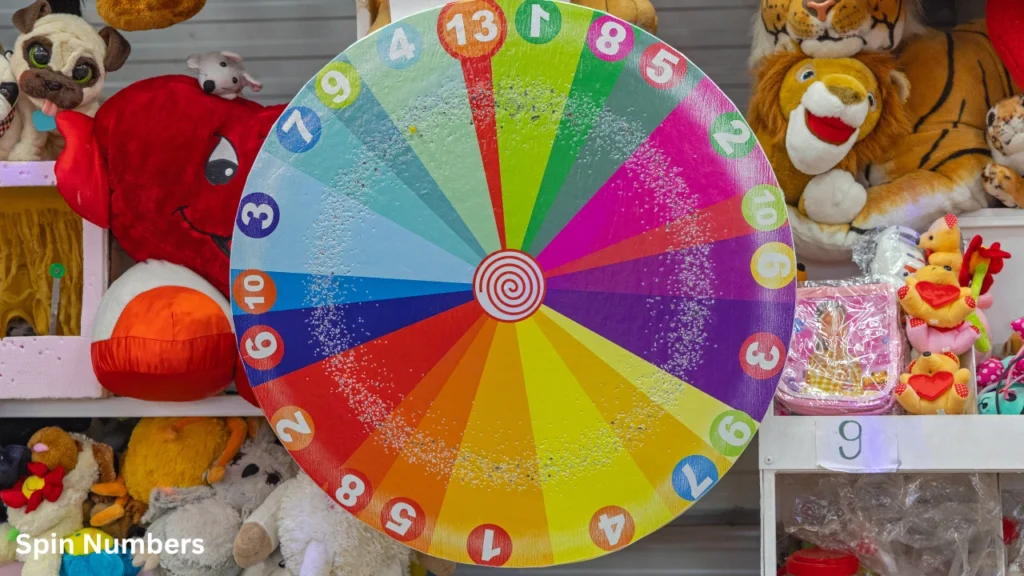
A custom spinner wheel is a physical or digital wheel divided into labeled segments. Each segment contains a name, a task, a question category, a difficulty level, or any other classroom variable the teacher chooses. The wheel spins, and whatever it lands on determines the next classroom action.
The word "custom" is what separates an effective instructional tool from a novelty. A generic name wheel produces random selection. A custom spinner wheel, built intentionally around specific lesson goals, classroom dynamics, and student needs, produces equitable, structured, and pedagogically purposeful participation.
Beyond Just Names
Most teachers begin with student names, which is a reasonable starting point. But the versatility of a custom spinner wheel becomes apparent when it moves from selecting who answers to selecting what gets addressed. Segments can contain:
- Review questions: Each segment contains a different topic area, so the wheel determines what gets reviewed next, not just who answers.
- Difficulty levels: Easy, medium, and challenging segments let students spin to determine question complexity, a self-differentiation strategy that students often find more motivating than teacher-assigned difficulty.
- Group roles: Leader, scribe, timekeeper, presenter. Spinning for roles distributes responsibility and prevents the same students from defaulting to the same positions each time.
- Classroom routines: Line leader, attendance helper, board eraser. Using the wheel for administrative tasks establishes fairness as a classroom norm from the first week.
- Brain breaks and transitions: Segments like "30 seconds of stretching," "share one interesting fact," or "free choice" use the wheel to manage transitions while maintaining engagement.
- Reward tiers: Homework pass, choose the next activity, five minutes of free reading. Unpredictable rewards are more motivating than predictable ones because the anticipation itself carries motivational value.
How It Works in a Real Lesson
A 7th-grade history class is reviewing the fall of Rome before an exam.
Without the wheel: The teacher asks an open question. Three hands go up. One student answers. Fourteen students disengage. No one knows which students actually understood the material.
With the custom spinner wheel: The teacher loads a topic wheel with eight categories: economic causes, military causes, political instability, the role of Christianity, barbarian invasions, administrative failures, comparison to other empires, and legacy. She announces the sequence: "I am going to spin the topic wheel first, then the name wheel. Whoever gets selected answers on that topic. Everyone should be ready for any category." The first spin lands on "economic causes." Students have ten seconds of silent thinking time. The name wheel lands on a student who rarely volunteers. That student has had warning and time to organize a thought. She answers. The class hears from someone they rarely hear from. That shift is not subtle.
This is the practical difference between a wheel used for random selection and a wheel used as an instructional tool.
Physical vs. Digital
A custom spinner wheel does not require technology. Paper plate spinners, laminated poster wheels, and cardboard constructions work well, especially in elementary classrooms where the physical act of spinning becomes part of the ritual.
Digital wheels offer advantages physical wheels cannot match: instant reconfiguration between activities, saving multiple presets for different classes or lesson types, removing absent students in seconds, and projecting the spin on a shared screen so every student watches the result together. For middle and high school classrooms, digital wheels also carry less of a "game show" association that some older students initially resist. If you need a fast and lightweight option to run this selection loop instantly, you can launch our ad-free Random Number Generator to map and draw student numbers in one click.
The format matters less than the principle: transparent, random, customizable selection that every student can see and trust.
How a Custom Spinner Wheel Compares to Popsicle Sticks
Popsicle sticks, the classic method of writing each student's name on a stick and drawing from a cup, serve the same core function as a spinner wheel: externalized random selection. The practical differences matter for implementation.
A spinner wheel is fully visible to the entire class during selection. Students watch it decelerate and see exactly where it stops. The collective suspense of that moment is a real engagement mechanism. Popsicle sticks involve a draw that most students cannot observe, which eliminates the shared anticipation element.
Spinner wheels reconfigure instantly for different content or purposes. Popsicle sticks require physical management: ensuring all names are in the cup, accounting for absences, deciding whether to replace drawn sticks. For teachers with four minutes between classes, that friction adds up. For elementary classrooms where the physical ritual has its own developmental value, popsicle sticks remain a perfectly reasonable tool. Digital spinner wheels simply offer more flexibility, more transparency, and a broader range of customization options for teachers who need them.
Why a Custom Spinner Wheel Improves Engagement (Backed by Psychology)
The effectiveness of random selection tools is not intuitive, and many teachers are initially skeptical. The evidence consistently supports their use, for reasons rooted in well-established principles of cognitive and behavioral psychology.
1. The Fairness Effect
Children and adolescents have a highly developed and easily triggered sense of procedural fairness. Research in developmental psychology, including foundational work by E. Allan Lind and Tom Tyler on procedural justice, shows that perceived unfairness in selection processes significantly reduces intrinsic motivation and engagement, even when the unfairness is unintentional.
When a teacher selects students, the selection is always open to interpretation. Students who are not chosen wonder why. Students who are chosen repeatedly may be resented. The perception of favoritism damages the social fabric of a classroom.
A custom spinner wheel externalizes the decision. The teacher is no longer the agent of selection. This single structural change eliminates the most common source of perceived bias. Students who are not selected cannot attribute it to the teacher's preferences. Students who are selected cannot be accused of being favorites. As teachers who use random selection tools consistently report: students may not love being called on, but they do not argue with the wheel.
2. Randomness Increases Attention
Predictability is the enemy of sustained attention. When students can accurately predict that they will not be called on, the rational response is to disengage. There is no cost to not paying attention.
Randomness changes this calculation. When any student can be selected at any moment, the expected cost of inattention increases. Psychologists call this the vigilance effect: unpredictable stimuli require more sustained monitoring than predictable ones. Students do not need to find the lesson inherently fascinating to stay engaged. They need only to believe that being unprepared carries a real risk.
This effect does not require that students fear being wrong. The anticipation of possibility, "I might be next," is sufficient to maintain a baseline of attention that voluntary participation systems rarely achieve across a full class.
3. Anticipation Activates Dopamine
Neuroscience research, including studies by Wolfram Schultz on reward prediction error, has established that uncertainty about a potential reward produces a stronger dopamine response than certainty of the same reward. This is why variable-ratio reinforcement, where rewards come at unpredictable intervals, produces the most robust and persistent behavioral responses.
The moment before a spin contains genuine uncertainty. For many students, even those who describe themselves as anxious about participation, this uncertainty produces a mild surge of anticipatory engagement. The spin itself becomes a micro-event in the classroom: a moment of collective attention and shared suspense.
Over time, teachers who use spinner wheels consistently report that students begin to want the wheel to be used. The tool transforms participation from something to be avoided into something to be anticipated, which is precisely the psychological shift that makes equitable participation sustainable rather than forced.
4. Reduced Pressure Compared to Volunteering
This is the finding that most surprises teachers: for many anxious students, random selection produces less anxiety than voluntary participation, not more.
Volunteering requires a student to make an active, visible choice to expose themselves. They must raise their hand, a public declaration of willingness to perform, before they have organized their answer. For students with social anxiety, this two-stage exposure is doubly threatening.
Random selection removes the first stage entirely. The student did not choose to be called on. The wheel chose them. This distinction is significant: being selected by an external process feels categorically different from volunteering. There is no self-exposure, no active vulnerability.
When teachers add structural supports, ten seconds of thinking time, a one-time pass option per class, and the ability to ask a classmate for help, the anxiety reduction is even more pronounced. Students know what to expect. Predictable randomness, counterintuitively, is less threatening than unpredictable voluntarism.

Real Classroom Use Cases (Practical Examples)
Theory is only useful to the extent that it translates into workable practice. The following five scenarios address the most common participation challenges teachers face, with specific implementation details for each.
Scenario 1: The Silent Student (Cold Calling Done Right)
The problem: A student clearly understands the material, as her written work consistently proves, but she has not spoken aloud in class for six weeks. Direct cold-calling by the teacher makes her visibly distressed. Her hand never goes up.
The implementation: Include her name on the wheel like everyone else's. Before the first use, establish three explicit rules with the whole class: the topic or question category is announced before the name is selected, giving everyone time to prepare; there is always ten seconds of silence after the name lands; and every student has one pass per class period that can be used without penalty or explanation.
Start with low-stakes wheels: preference questions, opinion prompts, or simple factual recall. Save analytical questions for after the routine is established.
The result: When the wheel selects this student during a low-stakes review, she is not singled out by the teacher. The wheel did it. She has had preparation time. She knows she can pass if she needs to. She attempts a brief answer. It is correct. The class moves on. No excessive praise, no drama. Just a normal moment of participation that, for her, is the first in weeks. These moments compound over time.
Scenario 2: The Dominant Student (Controlled Participation)
The problem: One student answers every question, usually correctly. His dominance means other students rarely get floor time. When the teacher skips him, he becomes visibly frustrated and sometimes quietly disruptive.
The implementation: Announce a wheel-only period, typically 15 to 20 minutes, where no hand-raising is permitted. The framing matters: "For this review activity, we are using only the wheel. The wheel decides who answers. No exceptions." When the dominant student raises his hand anyway, point to the wheel calmly. He cannot argue with this without arguing against the fairness principle he presumably benefits from on other days.
Separately, create a second wheel for this student during independent practice time, with challenging extension questions to work on when he is not the one selected. He stays engaged without dominating.
The result: Other students get consistent floor time. The dominant student learns to wait. The teacher has not punished him or publicly corrected him. The rules of the game simply changed.
Scenario 3: The Exam Review Session (Maximum Engagement)
The problem: Exam review is tomorrow. Traditional lecture produces glazed expressions. Traditional Q&A produces the usual three-student show. Neither approach generates the broad engagement that actually prepares a full class for an exam.
The implementation: Build three separate wheels. Wheel one contains five to eight major topics from the unit. Wheel two contains question types: cause, effect, key figure, date, significance, compare and contrast. Wheel three contains student names. Spin in sequence: topic, then question type, then student. The selected student must answer that specific question type about that topic.
Every student needs to pay attention to all three spins. The compound uncertainty keeps the entire class mentally active for the full review.
The result: Review sessions that previously produced passive note-comparing become genuinely competitive and attentive. Students identify gaps in their own knowledge mid-review, because they realize they cannot answer certain question types on certain topics.
Scenario 4: Group Work Role Assignment
The problem: Every group project follows the same pattern: the same students lead, the same students scribe, and one or two students contribute almost nothing. This dynamic is especially pronounced in self-selected groups, where friendship and social hierarchy drive role allocation.
The implementation: Before any group activity, spin a role wheel for each group. Roles include: Facilitator (keeps discussion focused), Scribe (records all ideas), Presenter (shares results with the class), Timekeeper (monitors progress against the allocated time), and Devil's Advocate (required to question every major decision the group makes). Rotate roles across every project so that by the end of the semester, every student has practiced every role.
The result: Students who would never voluntarily present are assigned the role by the wheel, not by the teacher, which removes the personal dimension from the assignment. Students who tend to dominate are sometimes assigned as Scribe, which requires them to listen rather than lead.
Scenario 5: The Reward and Recognition System
The problem: Behavior management systems based on point accumulation are administratively exhausting and easy to game. Students who have fallen behind on points disengage from the entire system because catching up feels impossible.
The implementation: Create a reward wheel with variable prizes: homework pass, choose the brain break activity, sit at the teacher's desk for one class period, five minutes of free reading time, choose a classmate to receive a reward, and a small mystery prize selected by the teacher. When any student demonstrates exceptional effort, meaningful improvement, or notable kindness, they earn a spin immediately and visibly.
The immediacy of the reward matters. Behavioral psychology research consistently shows that rewards given within seconds of the target behavior produce stronger reinforcement than delayed rewards.
The result: Students begin noticing and calling out positive behavior in peers because doing so might earn someone a spin, and watching a spin is its own reward. The wheel becomes a shared classroom experience rather than a teacher-controlled incentive tool.
Comparing Participation Methods
To understand where a custom spinner wheel fits relative to other participation strategies, it helps to compare methods directly across the dimensions that matter most for classroom outcomes.
| Method | Fairness | Student Engagement | Teacher Bias Risk | Student Anxiety Level | Best Use Case |
|---|---|---|---|---|---|
| Hand-Raising | Low: structurally favors confident, outgoing students | Low: most students disengage once they realize they will not be selected | Very High: unconscious bias in teacher selection is well-documented | Low for volunteers; High for students who want to participate but cannot bring themselves to raise their hand | Quick checks with small, high-confidence classes where every student is already engaged |
| Teacher Selection (No Pattern) | Low to Medium: perceived as arbitrary even when not intentional | Medium: students pay partial attention but do not feel personally accountable | High: patterns emerge inevitably over multiple class sessions | Medium: unpredictable but still perceived as teacher-driven | Small seminars where the teacher knows all students deeply |
| Calling on Students in Order | High: sequential rotation guarantees everyone is called on eventually | Very Low: students know exactly when their turn comes and disengage until then | None: the rotation system removes all teacher discretion | Low: students can anticipate their moment and prepare | Required presentations, oral exams, or structured accountability checks where order matters |
| Custom Spinner Wheel | Very High: random selection is visible, external, and undeniable | High: anticipation drives sustained attention across the full activity | Very Low: the wheel removes teacher judgment from the selection entirely | Low to Medium: significantly reduced when pass options, thinking time, and peer-help protocols are in place | Daily participation, review sessions, equitable cold calling, role assignment, and reward distribution |
The custom spinner wheel is not the right tool for every situation. Sequential calling is better when order genuinely matters. Teacher selection remains appropriate in small seminar settings where the teacher has deep knowledge of each student. But for the typical classroom of 20 to 35 students engaging in daily instruction and review, the spinner wheel outperforms the alternatives on the dimensions most correlated with equitable learning outcomes.
Step-by-Step Guide: How to Use a Custom Spinner Wheel Effectively
The difference between a spinner wheel that transforms a classroom and one that fizzles out after two weeks comes down almost entirely to implementation. The following six-step process accounts for the most common failure points.
Step 1: Set Up Your Wheel Intentionally
Resist the urge to dump all student names onto a wheel and start spinning. The setup decisions you make before the first spin shape how students experience the tool for weeks.
- Begin with name-only wheels for the first week. Let students get familiar with the format before adding topic or difficulty complexity. Novelty management is a real classroom dynamic: too much too soon creates chaos.
- Always project the wheel on a shared screen. Transparency is the core value of random selection. If students cannot see the wheel, they cannot verify the randomness, and the trust benefit disappears.
- Remove absent students before spinning. A wheel landing on an empty chair creates an awkward pause, often followed by comments on the absent classmate, a social dynamic that undermines the neutral tone you are trying to establish.
- Create separate saved wheels for different purposes. A name wheel for participation, a topic wheel for review, a role wheel for group work. Students need to understand what type of selection is happening and why.
Step 2: Establish Clear Rules Before the First Spin
Students need a complete picture of what happens when the wheel selects them before the wheel ever spins. Uncertainty about consequences is itself a source of anxiety the tool is supposed to reduce.
- The 10-Second Rule: After the wheel stops, the entire class has ten seconds of silent thinking time before anyone speaks. Post a visible timer. This single rule dramatically reduces anxiety for slower processors and improves answer quality for all students.
- The Pass Option: Each student has exactly one pass per class period. They can use it by saying "I need more time" or simply "Pass." No explanation required. No penalty. The teacher moves to another student selected by a second spin. The student who passed may still be called on again later. The pass only delays, it does not exempt.
- The Help Option: Before answering, the selected student may call on one classmate for a hint or starting point. They must then build on that hint and give the full answer themselves. This option creates peer interdependence.
- The Wrong Answer Protocol: Establish explicitly what happens when a student gives an incorrect answer. "That is not quite right, who can add to that?" followed by a return to the original student to repeat the correct answer is the most effective sequence. The goal is that every student ends their participation moment with success, not failure.
Step 3: Manage the Emotional Dynamics
The emotional environment of the first few wheel sessions sets the tone for every session that follows.
- Open with the lowest possible stakes. The first wheel activity should involve questions with no wrong answers: preferences, opinions, "what would you choose and why?" The goal is establishing the physical and social routine of being selected, not assessing content knowledge.
- Respond to effort, not just accuracy. When a student attempts an answer, acknowledge the attempt before addressing the content: "Good start, let's build on that." Avoid excessive praise ("Amazing! Brilliant!") which signals that ordinary participation is unusual and therefore remarkable. Normal, matter-of-fact acknowledgment is more respectful and more sustainable.
- Maintain a consistent neutral tone after wrong answers. The teacher's reaction to incorrect responses is the single most important variable in determining whether students feel psychologically safe. A tone noticeably more negative than the response to correct answers will teach students to fear being selected.
- Address resistance directly, not dismissively. Some students will initially resist the wheel, especially those who have developed strong avoidance strategies. Acknowledge this honestly: "I know this feels different. The goal is to make sure everyone gets a turn, not just the students who volunteer most often. That is fair for the whole class."
Step 4: Vary the Wheel Content
A name wheel used the same way every day loses its anticipatory power within two to three weeks. Variety maintains the novelty effect and expands the pedagogical range of the tool.
- Monday: Name wheel for participation warm-up. Low-stakes questions about prior knowledge or recent reading.
- Tuesday: Topic wheel covering different content areas or vocabulary terms, with the teacher selecting which student answers through a second spin.
- Wednesday: Challenge wheel with difficulty-level segments (quick recall, explain in your own words, apply to a new example, evaluate and critique) where students spin to determine the complexity of their task.
- Thursday: Role wheel used at the start of group work to assign positions for the collaborative activity.
- Friday: Reward wheel used to recognize effort or improvement observed during the week, with variable prizes students look forward to.
This weekly structure is a starting template. The underlying principle is that students should not be able to predict exactly how the wheel will be used on any given day.
Step 5: Track Outcomes
Random selection is random, meaning natural clustering occurs. Some students will be selected more often than others in a given week simply by chance. This does not undermine the fairness of the process, but it is worth monitoring over time.
- Keep an informal tally for the first month: a checkmark next to each name in your grade book each time they are selected. Review it at the end of each week to identify any students who have been selected zero times.
- Pay attention to pass patterns. Which students consistently use their pass? This is useful diagnostic data, not necessarily for intervention, but for understanding which students may need additional scaffolding.
- Compare engagement during wheel activities versus non-wheel activities. Is the quality of student responses higher? Are more students paying attention during the thinking-time pause? These informal observations tell you whether the tool is achieving its intended effect in your specific classroom.
Step 6: Gradually Increase Stakes
The goal is to build toward a classroom where random selection feels normal and even desirable, not to maintain perpetually low stakes forever. The progression should be gradual and based on observed student comfort.
- Weeks 1 to 2: Preference questions, icebreakers, opinion prompts with no wrong answer.
- Weeks 3 to 4: Simple content recall questions with no grade impact and multiple attempts encouraged.
- Weeks 5 to 6: Formative assessment questions requiring more developed responses and analytical thinking.
- Week 7 and beyond: Higher-order questions requiring synthesis and evaluation. Occasional brief graded participation moments, kept rare enough that the wheel does not become associated primarily with assessment anxiety.
Common Mistakes and When Not to Use It
A custom spinner wheel used without intention is not a neutral tool. It is an actively counterproductive one. The following mistakes are the most common causes of spinner wheel failure in classroom settings.
Mistake 1: Overusing Randomness
When the wheel is used for every interaction in a class period, students habituate to the stimulus. The anticipatory effect that drives attention depends on the spin being a notable event, not a constant background noise.
The fix: Designate specific wheel-based activity windows, typically 10 to 20 minutes within a lesson, and use other participation formats for the remainder of class time. When the wheel comes out, students should recognize it as a signal that a particular type of activity is beginning. Scarcity preserves value.
Mistake 2: Ignoring Student Anxiety
For most students, random selection with appropriate supports reduces participation anxiety. For a subset of students, particularly those with diagnosed social anxiety disorder, selective mutism, or significant trauma histories, any form of compelled public speaking is genuinely harmful rather than merely uncomfortable.
The distinction between discomfort and harm matters. Productive challenge, the mild anxiety of being called on when you know the material but are nervous, is a normal part of skill development. Harmful stress, the activation of a genuine anxiety response that impairs functioning, is not a tool for building resilience.
The fix: Review any accommodation plans or IEP documentation that addresses participation. Create genuinely optional alternative participation pathways: written response, small-group contribution before whole-class sharing, or digital submission. These accommodations do not undermine the tool for the rest of the class. They make the tool sustainable for students who would otherwise be harmed by it.
Mistake 3: Using It for High-Stakes Assessment
Random selection introduces variance that is appropriate for formative participation but inappropriate for summative assessment. A student who has mastered the material might be selected for the one question type they find most challenging. A student who has not prepared might be selected for the one area they happen to know.
The fix: Reserve random selection entirely for formative, ungraded, or minimally-graded participation. Use structured, non-random methods for any assessment that significantly affects a student's grade. The two functions, engagement tool and measurement instrument, should remain separate.
Mistake 4: No Follow-Up After Wrong Answers
The most damaging single moment in spinner wheel use is when a student gives an incorrect answer and the teacher immediately spins for someone else. This sequence communicates something specific and harmful: wrong answers result in being discarded and replaced. Students observe this and update their threat model accordingly.
The fix: Build a mandatory follow-up routine. When a student answers incorrectly: acknowledge the attempt, involve the class ("who can add something?"), clarify the correct answer, and then return to the original student to have them state the correct answer themselves. The student who answered incorrectly ends the exchange with a correct response on record. This requires slightly more time but produces dramatically better outcomes for classroom psychological safety.
When Not to Use a Spinner Wheel
- During sustained independent or silent work. Interrupting focused individual work with a random selection event breaks flow and signals that attention should be divided.
- During standardized test preparation. The wheel's game-like quality can undermine the seriousness of practice conditions that simulate the actual exam environment.
- When content requires extended, unprompted responses. Random selection works best for shorter, more structured responses. For essay-style verbal answers, Socratic discussions, or extended oral presentations, other participation structures are more appropriate.
- When the classroom emotional environment is already elevated. If there has been a conflict, a difficult discussion, or significant collective stress, introducing additional unpredictability is likely to increase tension rather than relieve it. Read the room before spinning.
Advanced Tips to Maximize Results
Once the basics are established and the wheel feels like a normal part of classroom culture, these strategies expand its effectiveness significantly.
Combine the Wheel with Gamification
The most effective gamification strategy for spinner wheel use is collective reward, where a correct answer after a spin earns a point for the entire class toward a shared goal, rather than individual recognition for the student who answered. This structural choice shifts the emotional dynamic from individual performance pressure to collective support. Students want the selected student to succeed, because the selected student's success benefits everyone.
Set class-wide targets: 50 points earns a no-homework day, 100 points earns a choice-of-activity session. Track progress on a visible classroom chart. The long-term goal keeps students invested in wheel activities across days and weeks, not just within a single session.
Use Multiple Wheels in Sequence
Sequential multi-wheel systems produce significantly higher engagement than single-wheel use. Wheel one determines the category or topic. Wheel two determines the specific question or task type within that category. Wheel three determines the student. Students must attend to all three spins because each one narrows their preparation requirement. They need to know everything on wheel one until it lands, then everything about that topic on wheel two, then everything about that specific task type if wheel three lands on them. The cognitive load of tracking three sequential uncertainties keeps students mentally active across the entire sequence.
Adapt for Different Age Groups
The underlying mechanics of random selection work across all grade levels, but the presentation and framing need to match the developmental stage of the students.
- Elementary (K to 5): Physical wheels with large, brightly colored segments work best. Spin slowly for theatrical effect. Celebrate every participation moment warmly and specifically. Use simple reward segments like "special helper today" or "choose the story" that have immediate, tangible meaning for young students.
- Middle School (6 to 8): Digital wheels projected on a shared screen work best. Students at this age respond well to mild competition: class-wide point systems and visible scoreboards. Allowing students to occasionally spin the wheel themselves, while the teacher controls which wheel is active, increases buy-in significantly.
- High School (9 to 12): The framing shifts from game to system. High school students respond better when the wheel is presented as a fairness mechanism rather than a novelty. Explaining the research behind equitable participation and inviting their feedback on how the wheel is used builds more sustainable buy-in than relying on game mechanics alone. Complex wheels with sophisticated task types (analyze, evaluate, synthesize, defend a position) are appropriate at this level.
Create Student-Designed Wheels
Once the wheel routine is established, periodically turning wheel design over to students produces two significant benefits. First, the process of deciding what questions to include, what difficulty levels to assign, and what categories matter is itself a high-quality learning activity that requires students to think about the material from a different perspective. Second, students who contributed to designing the wheel have personal investment in its use.
A practical implementation: give students an index card at the end of a unit and ask them to write one question they would put on the review wheel. Curate the submissions, select the best ones, build the wheel from their contributions, and spin it the following class. Students pay significantly more attention to a review session when they know their own question might come up.
Conclusion: What Actually Changes When You Use the Wheel Consistently
After six to eight weeks of consistent use, the wheel stops feeling like a classroom management strategy and starts feeling like a classroom norm. Students stop asking why they have to use it. They start asking when the wheel is coming out.
The students who change most visibly are rarely the ones who were already participating. They are the students who have been sitting quietly for months, understanding the material, waiting for a participation system that makes it possible for them to be heard without having to fight for floor time against faster, louder peers.
Here is a concrete starting point for the first week: load only student names onto one wheel. Establish the three rules (ten-second thinking time, one pass per period, no wrong-answer dismissals). Project it on your classroom screen. Use it for five minutes during one review activity. Note which students you would not have called on otherwise. Note whether their answers suggest they knew the material.
That data, from your own classroom, is more persuasive than any study summary.
Frequently Asked Questions
Q1: What is a custom spinner wheel in education?
A custom spinner wheel in an educational context is a digital or physical randomization tool that teachers configure specifically for their classroom needs. Unlike a generic name picker, a custom wheel can contain student names, review questions, topic categories, difficulty levels, group roles, or reward options. The teacher builds the wheel before class, spins it during instruction, and the result determines the next classroom action.
The word "custom" is what matters. A wheel preloaded with generic names is a novelty. A wheel built around the specific content of tomorrow's review session, with segments that correspond to actual unit topics and question types, is an instructional instrument. The distinction shows up in results: generic wheels produce engagement for a week or two before students habituate to the novelty. Custom wheels built around specific lesson content maintain engagement because the stakes of each spin are real.
Q2: Is a spinner wheel fair for all students?
In terms of procedural fairness, a spinner wheel is more reliably fair than any teacher-driven selection method. Every student has an equal statistical probability of being selected on any given spin. The process is visible and external, meaning students can observe and verify that the selection is not influenced by teacher preference.
Two practical caveats apply. First, randomness produces short-term clustering: a student might be selected three times in one week and zero times the next. This does not undermine fairness over time, but teachers should monitor selection frequency informally for the first month to identify any students who are consistently underselected. Second, procedural fairness does not automatically produce equitable outcomes for students with anxiety conditions who need additional structural supports. Maintaining pass options, thinking time, and alternative participation pathways ensures the tool works for all students, not just the majority.
Q3: Can shy students benefit from random selection?
For most shy students, yes. The counterintuitive finding supported by classroom participation research is that random selection with structural supports produces less anxiety than voluntary participation for students who are introverted or socially anxious, not more.
The reason is specific: voluntary participation requires two sequential anxiety-producing steps. The student must choose to raise their hand, a public declaration of willingness to perform, and then answer. For students with social anxiety, the first step is often the harder one. Random selection removes it entirely. The student did not choose to be called on. The wheel did. That distinction in external attribution significantly reduces felt vulnerability.
The supports matter as much as the randomness itself. Ten seconds of silent thinking time before the selected student must respond is the single most impactful addition. A one-time pass option per class period means students know they have an exit if they genuinely cannot respond. The option to call on a classmate for a hint before answering creates a collaborative safety net. Together, these structures make random selection feel predictable and safe, which is the opposite of how most teachers initially expect shy students to experience it.
The critical distinction is between productive discomfort (mild nervousness that accompanies growth) and genuine harm (anxiety that impairs functioning). For students whose anxiety falls into the second category, alternative participation pathways should exist alongside the wheel, not as exceptions but as designed options.
Q4: When should teachers avoid using a spinner wheel?
Three situations consistently call for a different approach.
First, during summative or high-stakes assessment. Random selection introduces variance that is appropriate for formative participation but inappropriate for measurement. A student who has mastered the material might happen to be selected for the one question type they find most challenging. Mixing the wheel with graded outcomes also trains students to associate it with evaluation anxiety, which undermines its effectiveness as a low-stakes engagement tool.
Second, when a student has a documented accommodation that modifies or exempts public participation requirements. IEP and 504 plan accommodations take precedence over any classroom management strategy. Teachers should review accommodation documentation before implementing the wheel and design alternative participation pathways before the first spin, not after a problem arises.
Third, during Socratic seminars, extended analytical discussions, or oral presentations that require self-regulation and strategic pacing. The game-like quality of a spinner wheel can undermine the tone of activities that require sustained, self-directed engagement over longer periods.
Q5: How long does it take to set up a custom spinner wheel?
This is the practical question that most articles skip. The answer is: three to five minutes for a standard name wheel on most digital platforms. Typing 25 student names into a digital wheel, adjusting any weighting, and saving the configuration takes about as long as taking attendance.
Topic wheels and review wheels take longer because the content itself requires thought. Building a topic wheel for an upcoming exam review, with eight to twelve category segments drawn from the unit, takes 10 to 15 minutes the first time and two to three minutes to update for subsequent units once the template exists.
The time investment is front-loaded. A name wheel saved once at the start of the semester takes seconds to load for every subsequent class. Removing absent students takes one click. For teachers who have 4 minutes between classes, the practical workflow is: open saved wheel, remove any absent names, project, spin. The daily time cost is negligible once the initial configuration is done.
Q6: What should I put on a classroom spinner wheel?
The content of a spinner wheel should match its instructional purpose precisely.
For a participation wheel, student names are the obvious choice. Consider whether equal weighting makes sense for your classroom: some teachers weight names equally to emphasize procedural fairness; others add a student's name twice if that student needs more practice opportunities, which increases the probability of selection without making it predetermined.
For a review wheel, use specific questions, vocabulary terms, or topic categories from the current unit, not generic categories. "Economic causes" is more useful than "Unit 3 Topic." Specificity produces accountable responses.
For a role-assignment wheel, include every group role with a brief definition printed on the wheel itself, not assumed to be known. Students need to understand what Facilitator means before they are assigned the role.
For a reward wheel, survey students at the start of the year about preferred rewards. Teacher-selected prizes are consistently less motivating than student-selected ones. A five-minute reward that students nominated themselves produces more engagement than a homework pass that the teacher chose because it seemed universally appealing.
Q7: How do I use a spinner wheel in a remote or hybrid classroom?
In fully remote settings via Zoom or Google Meet, digital spinner wheels work particularly well because screen sharing makes the spin visible to every student simultaneously, which is difficult to replicate with physical tools.
The practical workflow: share your screen to project the digital wheel. Spin with the full class watching. The name or topic that lands is announced aloud and visible on screen. The 10-second thinking time rule applies exactly as it would in person: mute all students, set a visible timer on screen, unmute the selected student when time is up.
In hybrid settings where some students are in the room and some are remote, project the wheel on the classroom screen and share it simultaneously on the video call. Remote students can see the spin in real time. Include all students, in-room and remote, on the same wheel. Remote students who are selected unmute and answer through the call. The logistical addition is minor; the equity benefit is significant, since remote students in hybrid classrooms are especially prone to being overlooked by teacher-driven selection methods.
References
Rowe, M. B. (1974). Wait-time and rewards as instructional variables, their influence on language, logic, and fate control. Journal of Research in Science Teaching, 11(2), 81-94. https://doi.org/10.1002/tea.3660110202
Tobin, K. (1987). The role of wait time in higher cognitive level learning. Review of Educational Research, 57(1), 69-95. https://doi.org/10.3102/00346543057001069
Good, T. L., & Brophy, J. E. (2003). Looking in classrooms (9th ed.). Allyn & Bacon.
Sadker, M., & Sadker, D. (1994). Failing at fairness: How America's schools cheat girls. Touchstone.
Skinner, B. F. (1938). The behavior of organisms: An experimental analysis. Appleton-Century-Crofts.
Lind, E. A., & Tyler, T. R. (1988). The social psychology of procedural justice. Plenum Press.