Last reviewed June 2026 . By Spin Numbers
Student participation is one of the most reliable predictors of learning outcomes in any classroom. The gap between knowing participation matters and consistently achieving it is where most classroom engagement strategies fall apart. Most teachers want every student involved. Most classrooms end up with the same five students answering most of the questions. This guide explains why student participation produces measurable learning benefits, what prevents it from being equitable by default, which common strategies underperform, and which practical methods consistently work better.
Table of Contents
Why Student Participation Produces Better Learning Outcomes
Passive reception of information, whether through listening, reading, or watching, produces weaker retention than active engagement with the same material. This is one of the most replicated findings in educational psychology.
Edgar Dale’s research on learning retention, later developed into what became known as the learning pyramid, found that students retain a significantly higher proportion of material from discussion, practice, and teaching others than from lectures alone. While the specific percentages associated with the pyramid have been debated in later literature, the directional finding is consistent across decades of research: active engagement produces stronger retention than passive exposure.
The mechanism is not difficult to explain. When students articulate an answer, explain their reasoning, or respond to a question in front of others, they are processing the material at a deeper cognitive level than listening requires. The act of formulating a response strengthens the neural pathways associated with that information. Retrieval, even imperfect retrieval, consolidates learning in a way that passive reception does not.
Student participation also creates accountability. Students who know they may be called on at any moment maintain engagement with the lesson rather than waiting for it to end. This sustained attention compounds over a school year into measurable differences in understanding, retention, and the ability to express ideas clearly under pressure.
Why Student Participation Is Rarely Equitable by Default
Left to natural classroom dynamics, student participation concentrates in a small subset of students. This is not a teacher failure. It is a structural pattern that emerges from how most classrooms are set up.
Consider a realistic scenario: a class of 28 students where, over two weeks of observation, two students in the front row account for nearly half of all question responses. A student in the back who understands the material well has not spoken once. This is not the result of malice or indifference. It is what voluntary participation systems produce.
The students who participate most are not necessarily those who understand the material best. They are the ones most comfortable speaking publicly, most confident in their answers, and most socially integrated in the classroom. These factors correlate with, but are not identical to, academic ability.
Teachers also introduce participation inequities unconsciously. Research on teacher-student interaction patterns, documented by Good and Brophy across multiple editions of “Looking in Classrooms,” shows that teachers call on boys more frequently than girls in mixed classrooms, favour students seated at the front and center, and tend to return to students who have previously given correct answers. These patterns persist even among teachers who believe they are distributing participation fairly.
The result is a participation gap that compounds over time. Students who participate regularly build confidence through repeated public engagement. Students who rarely participate lose practice in formulating and expressing ideas, which affects their performance in assessments, presentations, and collaborative settings that require exactly that skill.
If you want to understand the deeper mechanics of why random selection fixes this pattern, our article on equal chance random selection explains the research behind fair participation systems in detail.
What Does Not Work as Well as It Seems
Several common student participation strategies produce less equitable outcomes than teachers expect.
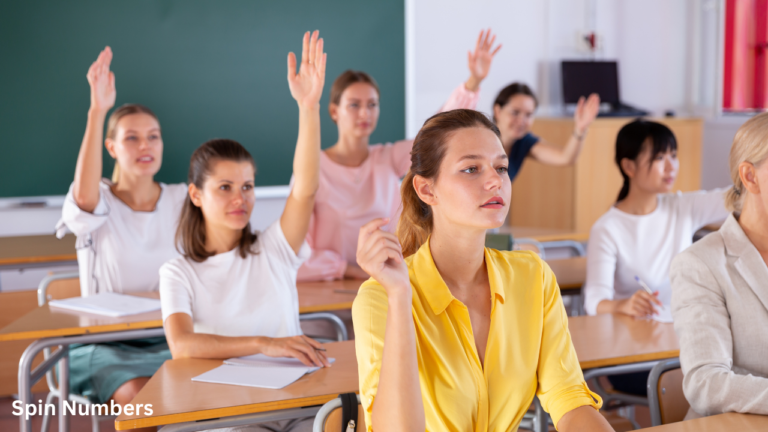
Voluntary hand-raising is the most common and least equitable approach. It systematically favours confident, socially comfortable students and allows the rest of the class to disengage without consequence. A teacher who relies on hand-raising as their primary participation method is, in practice, running a classroom where most students have learned that participation is optional.
Group discussion without structure tends to reproduce the same participation patterns as whole-class discussion. Without a mechanism that distributes speaking roles, dominant voices speak more and quieter students contribute less. Group work does not automatically produce equitable participation. It produces equitable opportunity, which is not the same thing.
Participation grades create compliance without genuine engagement. Students who know they are being assessed for participation will speak to satisfy the requirement, not necessarily to engage with the material. This produces participation in form without the cognitive benefits that genuine engagement provides.
Methods That Consistently Improve Student Participation
Random Cold Calling With a Visible Student Participation Tool
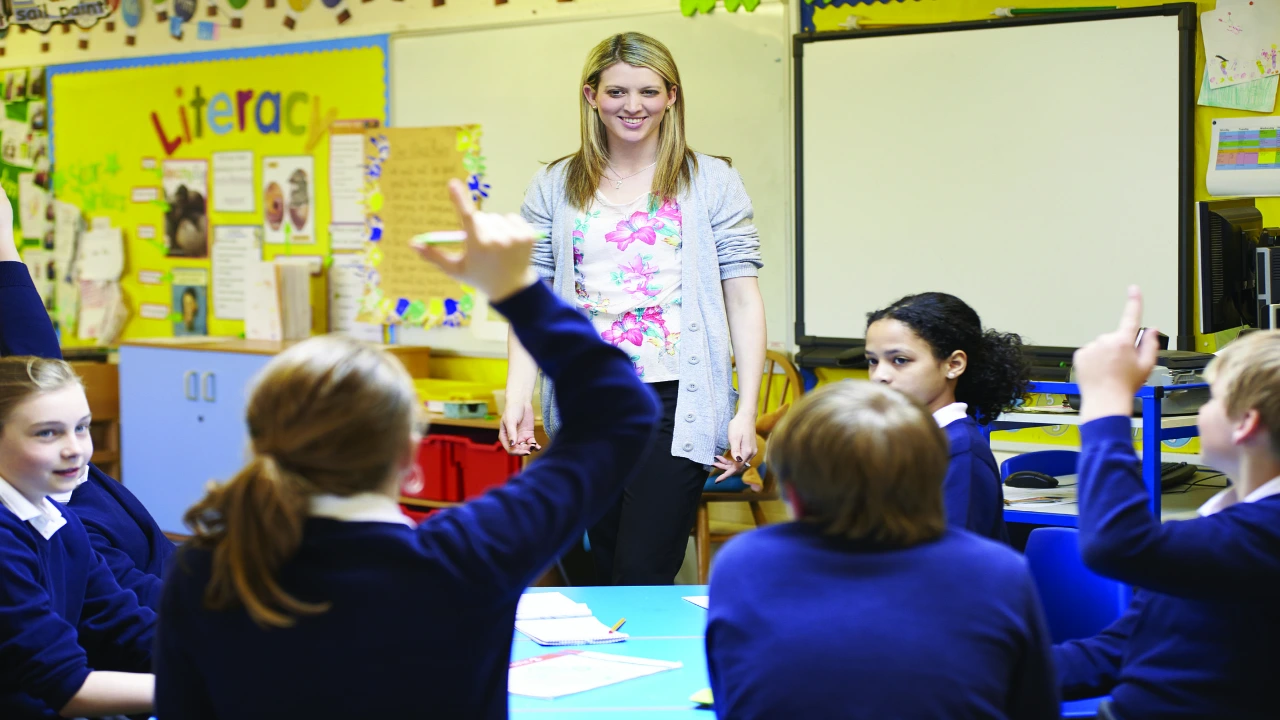
Selecting students randomly using a visible tool is one of the most effective single interventions for equitable student participation. Every student has equal probability of being called on, and the visible randomness, such as a spinning wheel stopping on a name, removes the social dynamics that make teacher-directed selection feel targeted or punitive.
When students can watch the selection happen in real time, the outcome feels like chance rather than judgment. This distinction matters to students, particularly to those who are less confident and who might otherwise interpret being called on as a signal that the teacher thinks they do not know the answer.
A practical example: a history teacher uses a digital name picker displayed on the classroom screen after each new topic point. He tells students from the first lesson that the wheel decides, not him. Over time, even the most reluctant speakers begin preparing responses because they know the selection is genuinely random and that any lesson might call on them.
Tools such as Wheelofnames.com and Pickerwheel.com are free, require no account for basic use, and work on any classroom device. Display the tool on a projector or smartboard so every student sees the spin happen. You can also use a random number generator to assign numbers to students and select randomly without entering names at all, which is faster to set up at the start of a new class.
Wait Time Before Selection
Mary Budd Rowe’s research on wait time, published in the Journal of Research in Science Teaching (1974) and replicated across subsequent studies, found that pausing for at least three seconds after asking a question before calling on anyone significantly improved both the quality of student answers and the range of students who engaged.
The practical instruction is simple: ask the question, count silently to three, then spin or select. Do not allow any student to respond during the thinking period. The silence feels uncomfortable at first. It produces better results precisely because it is slower.
Combined with random selection, wait time ensures that the student selected has had a genuine opportunity to think before being called on. This reduces anxiety and improves the quality of the response, which makes classroom discussion more substantive for everyone.
Think-Pair-Share Before Whole-Class Student Participation
Asking students to think individually, then discuss briefly with a partner, before the whole-class discussion begins gives every student the experience of articulating their thinking before facing the full group. Students who are called on after a pair discussion have already tested their answer with one person, which significantly reduces the vulnerability of public speaking.
The sequence matters. Individual thinking first (60 to 90 seconds of silent writing or reflection), pair discussion second (90 seconds), whole-class sharing third. Skipping the individual thinking step allows students to let their partner do the cognitive work. The written or silent individual step ensures that every student has produced something before the social support of the pair begins.
Structured Turn-Taking in Small Groups
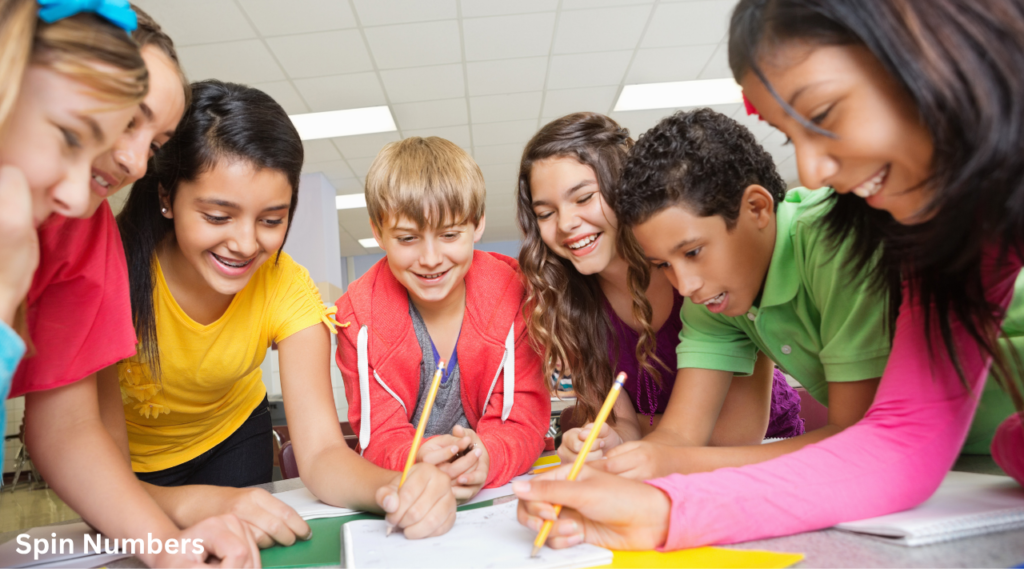
Assigning speaking roles within small groups, such as first speaker, responder, and summariser, ensures that student participation is distributed rather than emergent. Random assignment of these roles prevents the same students from always taking the leadership position, which is what self-selection consistently produces.
Random group formation compounds this benefit. When groups are formed randomly rather than by student choice, the social clustering that produces dominant and silent voices within groups is disrupted. Our guide on random vs self-selected groups in the classroom explains in detail why random grouping consistently outperforms self-selection for equitable participation.
The Role of Classroom Culture in Student Participation
No student participation strategy works in isolation from the classroom culture in which it operates. Students participate more when they believe that wrong answers are treated as part of the learning process rather than as failures.
The way a teacher responds to incorrect answers is one of the strongest signals about whether participation is safe. A response that redirects without embarrassment, such as “interesting thinking, let’s build on that” or “not quite, who can add to this?”, teaches students that speaking carries low social risk. A response that signals disappointment or draws attention to the error teaches students that silence is safer than exposure.
This culture does not develop from a single lesson. It develops from consistent teacher behaviour across many interactions. Students are watching to see whether the pattern holds, not whether the teacher means well.
Random selection accelerates the development of a participatory culture because it normalises being called on as a regular part of lessons rather than an exceptional event. When selection is ordinary, the stakes of any individual response feel lower. When lower stakes become the expectation, more students are willing to engage.

Grade-Level Considerations for Student Participation
Primary school (K-5). Younger students respond well to simultaneous-response formats where everyone answers at the same time, such as thumbs up or down, mini whiteboards, or physical movement to different areas of the room. Random individual selection works, but pairing it with whole-class response moments reduces the anxiety of being the only one speaking.
Middle school (6-8). This is the age group where student participation inequity tends to become most entrenched. Social dynamics are at their most intense, and the cost of being wrong in front of peers feels highest. Random selection with a visible tool is particularly valuable at this level because it removes the teacher from the selection decision entirely. Students cannot interpret the selection as targeted.
High school (9-12). Older students respond well to discussion formats where participation is expected and structured rather than voluntary. Fishbowl discussions, Socratic seminars with assigned speaking roles, and debate formats that require every student to take a position all produce more equitable participation than open discussion.
Frequently Asked Questions About Student Participation
How do you encourage student participation from very shy students?
The most effective approach is gradual exposure combined with low-stakes opportunities. Begin by calling on shy students for factual recall questions where there is a clear correct answer. As they experience success in low-stakes moments, their willingness to engage with more open-ended questions typically increases. Avoid excluding shy students from random selection. Consistent exclusion reinforces the idea that participation is optional for them, which is the opposite of what equitable student participation requires.
Does random selection work in online or hybrid classrooms?
Yes, with one adjustment: share the name picker tool on screen during video calls so all students see the selection happen in real time. The shared visual experience maintains the same accountability dynamic as in-person random selection. In hybrid settings, display the tool on the classroom screen and ensure it is visible in the camera frame so remote students see it simultaneously with in-person students.
How often should you use random selection to improve student participation?
Random selection works best as a consistent default rather than an occasional technique. When students experience it regularly, it becomes a normal part of classroom culture rather than an event. Occasional use does not produce the sustained engagement effect that consistent use creates over time. Use it as your primary selection method for question-and-answer segments, supplemented by think-pair-share for more complex questions that benefit from peer discussion before individual response.
What is the best way to track student participation over time?
The simplest approach is a printed class roster where you mark each time a student is called on. Over two to three weeks, patterns become visible: students who have been selected frequently and students who have not been selected at all. This record allows you to verify that random selection is distributing student participation across the full class over time and to make minor manual adjustments if the distribution is uneven.
What do you do when a randomly selected student says they do not know?
Accept it, prompt gently, and move on without making the moment significant. “What do you know about this topic?” or “What would you guess?” gives the student a lower-stakes entry point. If they still cannot contribute, move to another student and return to the first student with a simpler follow-up question before the lesson ends. The goal is that every interaction with the participation system ends with the student having said something, even if it is small.
Conclusion
Student participation is not just a classroom management concern. It is a learning mechanism. Students who actively engage with material retain it more effectively, develop stronger skills in articulating ideas, and build the confidence that comes from repeated experience of contributing successfully to a group.
Making student participation equitable requires more than good intentions. It requires a system that counteracts the unconscious patterns that concentrate opportunity in a small group. Random selection with a visible tool, combined with adequate wait time and a classroom culture that treats wrong answers as steps in the learning process, is the most consistently effective combination available to most teachers.
The practical starting point is one lesson. Choose an upcoming question-and-answer segment, replace hand-raising with a random name picker displayed on your classroom screen, give three seconds of think time before every spin, and respond to every answer with the same supportive redirect regardless of whether it is correct. Run that format for four weeks and review your participation tracking data. The distribution across your class will tell you whether the system is working in your specific context.
Most teachers who try this do not go back to hand-raising as their primary method.
References:
Good, T. L., & Brophy, J. E. (2008). Looking in classrooms (10th ed.). Pearson.
Roediger, H. L., & Butler, A. C. (2011). The critical role of retrieval practice in long-term retention. Trends in Cognitive Sciences, 15(1), 20-27. https://doi.org/10.1016/j.tics.2010.09.003
Rowe, M. B. (1974). Wait-time and rewards as instructional variables, their influence on language, logic, and fate control. Journal of Research in Science Teaching, 11(2), 81-94. https://doi.org/10.1002/tea.3660110202
Sadker, D., & Zittleman, K. (2009). Still failing at fairness: How gender bias cheats girls and boys in school and what we can do about it. Scribner.