By Massilya Slach · April 2026
Random Name Generator Wheel tools are designed to solve a common classroom problem: participation imbalance.
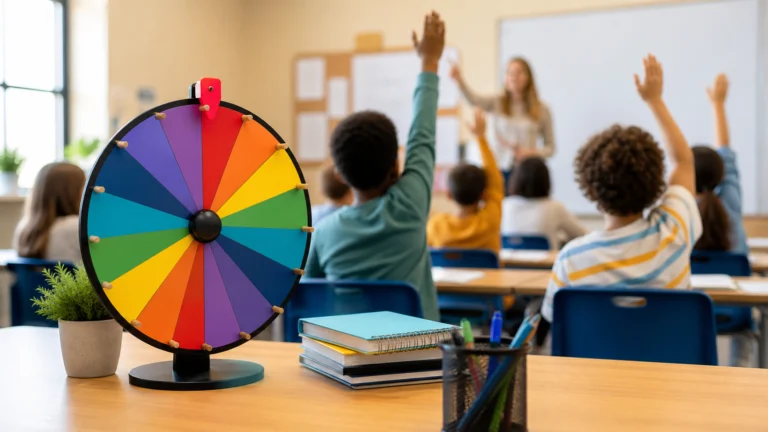
Calling on students who raise their hands consistently favors the same voices. The confident, the fast, and the already-engaged get the most airtime. Everyone else waits or stops paying attention entirely.
A random name Generator wheel solves this by removing the choice from the teacher entirely. Every student has equal probability of being selected, every time. The spinning animation makes the selection visible to everyone in the room, which adds a social dimension that a name drawn from a hat cannot replicate.
This guide covers how the tool works, when it genuinely helps, and the specific classroom situations where it adds the most value.
Table of Contents
How a Random Name Generator Wheel Works
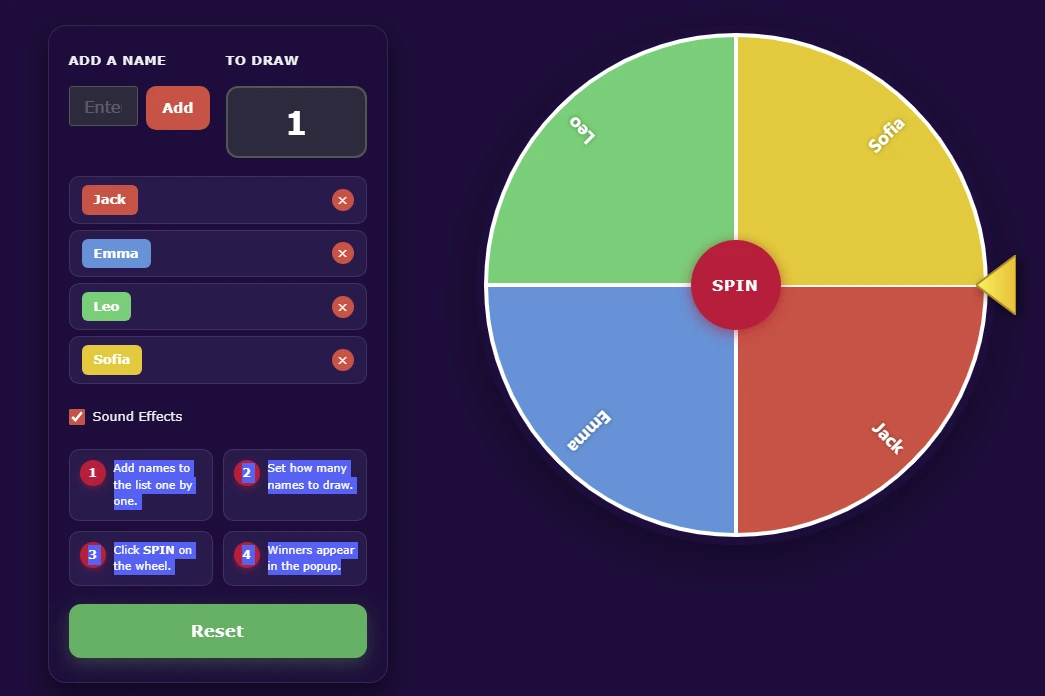
Names are placed on segments of a virtual wheel.
When you click spin, a random number generator determines the outcome
before the animation begins. The wheel rotates and slows to land on the selected name.
Each name carries equal probability regardless of its position on the wheel
or the order it was entered.
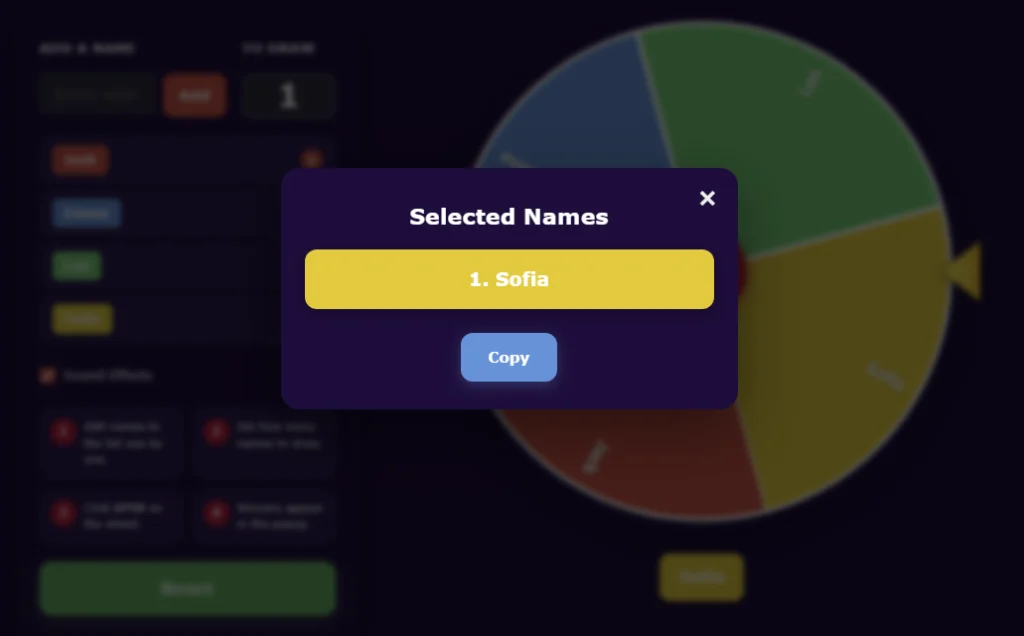
The Random Name Generator Wheel follows this process directly.
You add names one by one, set how many names to draw,
and spin. Selected names appear in a popup.
The tool processes everything locally in your browser
no account required, no names stored or transmitted.
For group formation, you remove selected names after each spin
and repeat until all groups are filled.
For recurring use like daily student selection,
you keep the full list and spin as needed throughout the session.
Why Random Selection Works Better Than Hand-Raising
The research on classroom participation patterns is consistent.
Studies in educational psychology show that in typical hand-raising environments,
a small subset of students often five to eight in a class of thirty
account for the majority of voluntary responses.
The rest develop a passive relationship with classroom discussion over time.
cold calling selecting students without the hand-raising cue
is one of the most effective interventions for this pattern.
Research by Doug Lemov, documented in Teach Like a Champion,
identifies it as a core practice among highly effective teachers.
The key mechanism is accountability:
when students know they can be called at any moment,
they maintain engagement with the material rather than waiting to see
if a volunteer will answer for them.
A Random Name Generator Wheel makes cold calling feel fair rather than targeted.
The visible randomness the spinning, the gradual deceleration, the name appearing
signals to students that selection is genuinely impartial.
This removes the social discomfort that can come with a teacher directly choosing who to call on.
Classroom Applications That Work Well
Question and answer during lessons
This is the most common use. Instead of waiting for hands,
spin the wheel after asking a question.
The selected student answers.
The class stays attentive because anyone could be next.
For questions that require more thought,
spin before asking giving the selected student time to prepare
while you pose the question to the class.
Group formation for projects
Random group formation prevents the clustering that happens
when students self-select. Friends stay together,
strong students cluster, and students who are less socially integrated
end up working with whoever is left.
A name wheel distributes students across groups without social friction.
Spin for each group in sequence, removing selected names between spins.
Classroom job rotation
Weekly classroom jobs line leader, materials distributor, board cleaner
are often assigned by the same informal processes that create participation inequity.
A weekly spin assigns jobs visibly and fairly.
Students who want specific jobs have the same chance as everyone else,
which eliminates the negotiation that often surrounds job assignment.
Presentation and topic assignment
When students need to be assigned presentation slots or research topics,
a wheel spin makes the assignment feel like chance rather than teacher judgment.
This is particularly useful when some topics or slots are perceived as more desirable.
A visible random assignment removes any perception of favoritism.
Reward and recognition draws
For point-based reward systems where students earn entries,
a Random name Generator wheel draw at the end of the week or month gives the reward process
a moment of shared anticipation.
Displaying the spin on a classroom screen turns the draw into a brief
communal event that reinforces the value of earning entries.
How to Get the Most Out of the Tool
Keep the wheel visible to the class.
The social value of a random selection tool comes from its transparency.
If only the teacher sees the result, the process loses the shared-anticipation element
that makes it more engaging than simply announcing a name.
Display the wheel on a projector or classroom screen.
Set up your name list before the lesson.
Entering twenty-five names while students wait disrupts the flow of the lesson.
Set up the list once at the beginning of the term,
then return to it each time you need it.
Some teachers maintain separate lists for different class periods.
Remove selected names when forming groups.
The most common error with group formation is forgetting to remove a name after it is drawn,
resulting in the same student appearing in multiple groups.
Remove each selected name from the list immediately after it is drawn.
Decide what happens when an absent student is selected.
Make this rule in advance and communicate it to the class.
Options include spinning again, keeping the absent student’s turn for when they return,
or moving to the next name. Consistency matters more than which rule you choose.
Use it strategically, not for every interaction.
The engagement value of the spinning wheel comes partly from its novelty.
If every single classroom interaction is mediated by the wheel,
it becomes background noise.
Reserve it for moments where the visible randomness adds something participation selection, group formation, draws and use other methods for quick informal interactions.
Remote and Hybrid Classroom Use
The Random Name Generator Wheel translates directly to remote learning with one adjustment: screen share the browser tab showing the wheel so students in the video call can see the spin happen in real time. The shared visual experience maintains the same anticipation dynamic that makes it effective in person.
For hybrid classrooms where some students are present and some are remote,
display the wheel on the classroom screen
and ensure the screen is visible in the camera frame for remote participants.
Both groups experience the selection simultaneously.
Frequently Asked Questions
Is the selection truly random?
Yes. The outcome is determined by a random number generator before the animation begins.
Each name in the list has exactly equal probability of being selected on any given spin,
regardless of position or order of entry.
Can I draw multiple names at once?
Yes. Set the number of names to draw before spinning.
The tool selects that many distinct names from the list and displays them in a popup.
This is the most efficient approach for group formation.
How many names can I add?
The Spin Numbers Random Name Generator Wheel handles standard class sizes without limitation. You can add names for a single class period or maintain a larger list
for multiple sections if needed.
Are student names stored anywhere?
No. Names are processed locally in your browser and are not stored or transmitted.
The list exists only in your current browser session.
What if a student objects to being selected?
The visible randomness of the wheel is your answer.
“The wheel selected you” removes the sense that the teacher targeted anyone specifically.
Most student resistance to being called on comes from feeling singled out
visible random selection addresses this directly.
Can I use it on a tablet or phone?
Yes. The tool works fully on smartphones and tablets through the browser,
with no installation required.
Conclusion
A Random Name Generator Wheel is one of the more straightforward interventions
for improving classroom participation equity.
It makes cold calling feel fair, keeps all students accountable to the material,
and adds a visible, shared moment to routine selections that would otherwise be invisible.
The technology is simple. What matters is using it consistently
and in the moments where visible randomness genuinely adds value
participation, group formation, and drawsrather than as a replacement for all classroom interaction.