

By Spin Numbers · Jun 2026
Using games in the classroom has become a default recommendation in teacher training and education literature. The assumption is straightforward: if students are having fun, they are more engaged, and if they are more engaged, they are learning more effectively.
This assumption is partially correct and frequently overapplied. Using games in the classroom produces genuine learning benefits in specific conditions and produces very little in others. Understanding the difference matters more than adding games to lessons simply because they seem like a good idea. This guide explains what the research actually shows, when classroom games genuinely work, when they do not, and how to make the decision with a practical framework you can apply before your next lesson.
Table of Contents
What the Research Actually Shows About Games in the Classroom
The research on game-based learning is more nuanced than most education summaries suggest.
A meta-analysis by Jan Plass, Bruce Homer, and Charles Kinzer, titled “Foundations of Game-Based Learning” and published in Educational Psychologist, 50(4), 258-283 (2015), found that games produce measurable learning benefits under three specific conditions: when they are designed around specific learning objectives, when the game mechanics require direct engagement with the target content, and when students receive feedback during play that connects game outcomes to learning goals.
Games in the Classroom that are added to lessons primarily for motivation, where the game format sits separately from the content itself, show much weaker effects on learning outcomes. Students enjoy the activity but retain less than they would from direct instruction covering the same material.
The distinction is between games as a learning mechanism and games as a reward or motivational tool. Both have a place in classrooms. Only one consistently improves learning outcomes.
A pattern many teachers notice is that students react positively to games initially, but the actual learning impact depends heavily on how the activity is structured. The same students who appear highly engaged during a game-based lesson sometimes perform no better on follow-up assessments than students who completed a standard review. Engagement and learning are related but not identical, and treating them as the same thing is where most game-based lessons go wrong.
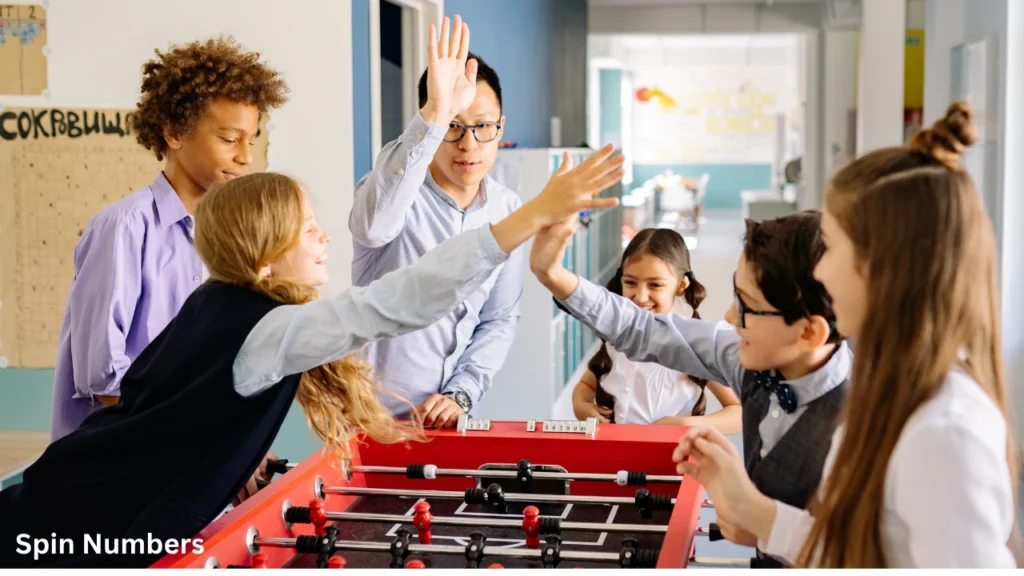
When Using Games in the Classroom Genuinely Helps Learning
Retrieval practice and review
Games that require students to recall and apply previously learned information are among the most effective classroom interventions available. Quiz-format games, flashcard competitions, and rapid-fire review activities leverage retrieval practice, which cognitive science research consistently identifies as one of the highest-impact learning strategies.
The research base here is substantial. Roediger and Butler (2011), writing in Trends in Cognitive Sciences, found that repeated retrieval practice produces stronger long-term retention than additional study time by a significant margin. The game format in this context is not just motivational. It structures repeated retrieval attempts in a way that feels less effortful than drilling, which means students engage in more retrieval practice than they would in a traditional review session.
A practical example: a teacher running a vocabulary review before an assessment uses a quiz game where students are selected randomly to define terms, give examples, or use words in context. The game format produces more total retrieval attempts per student per minute than a written review, and the random selection ensures that every student is retrieving, not just the volunteers.
Vocabulary and language acquisition
Games that require students to use new vocabulary in context, such as word association, definition matching, and synonym challenges, accelerate acquisition by creating multiple exposures to the same terms in varied contexts. Repetition through game play feels different from repetition through drill, and students sustain attention longer as a result.
Nation (2001), in “Learning Vocabulary in Another Language,” identifies multiple varied encounters with a word as a key driver of retention. A game that produces ten encounters with a vocabulary term across a 15-minute session is doing meaningful acquisition work, provided the game mechanics require genuine engagement with the word’s meaning rather than just its surface form.
Mathematical reasoning and pattern recognition
Strategy games that require quantitative reasoning develop mathematical thinking in ways that standard problem sets do not always reach. Students who resist traditional math exercises often engage willingly with game-based challenges that use the same underlying skills. The game context reduces the performance anxiety that written math tasks can trigger, particularly for students with a history of difficulty in the subject.
Social and collaborative skills
Cooperative games in the Classroom where students work together toward a shared goal, rather than competing against each other, build communication, negotiation, and shared problem-solving skills. These outcomes are difficult to produce through individual work and emerge naturally from well-designed cooperative game structures.
Johnson and Johnson (1989), whose research on cooperative learning is among the most replicated in educational psychology, found that cooperative structures consistently outperform competitive and individualistic structures for both learning outcomes and interpersonal skill development. Using games in the classroom in a cooperative format channels this effect directly.
When Games in the Classroom Do Not Help as Much as Expected
When the game is disconnected from the learning content
Adding a game element to a lesson, such as awarding points for correct responses or adding background music during work time, changes the atmosphere without necessarily changing what students learn. Students enjoy the novelty. Engagement appears to increase in the short term. But if the game mechanics do not require students to engage with the content itself, the learning outcomes are similar to or weaker than direct instruction.
The test is simple: could a student win the game without engaging meaningfully with the target content? If yes, the game is providing atmosphere rather than learning benefit.
When games in the classroom replace explanation rather than reinforce it
Games work best as practice and reinforcement tools, not as first-exposure tools. Students who encounter new content for the first time through a game often focus on game mechanics rather than content. They learn how to play the game without necessarily learning what the game is about.
The effective sequence is instruction first, game-based practice second. Using a game to introduce material that students have not yet encountered inverts this sequence and typically produces weaker outcomes. This is one of the most common errors in game-based lesson design and one of the easiest to correct.
When competition creates anxiety rather than motivation
Competitive games work well for students who are confident in the subject matter. For students who are less secure, competition makes their relative performance visible to the entire class, which creates performance anxiety that reduces engagement rather than increasing it.
A student who already feels behind in a subject is unlikely to benefit from a game that highlights that gap publicly. The game format amplifies existing confidence differences rather than providing the lower-stakes environment that struggling students need. When using games in the classroom with mixed-ability groups, competitive formats require careful thought about which students will experience them as motivating and which will experience them as exposing. To lower these social stakes and protect quiet learners, you can combine your activities with a structured equal chance random selection process that normalizes cold calling.
When novelty wears off
The motivational effect of using games in the classroom is partly driven by novelty. A game that is new and surprising produces stronger engagement than the same game used repeatedly across many lessons. Teachers who rely heavily on the same game formats often find that engagement returns to baseline levels after the initial novelty period.
Rotating game formats maintains the novelty effect but requires more planning. A practical approach: designate two or three game formats per term and rotate them, rather than introducing a new game every lesson or using the same game for every review session.
Making Random Selection Part of Game-Based Activities
One practical application of game elements that works consistently is using random selection to manage participation during review activities.
Rather than having students volunteer answers or compete to respond first, a random selection tool chooses which student responds to each question. This distributes participation across the class, maintains the engagement effect of uncertainty (anyone could be called on next), and removes the dominance of confident students that voluntary participation naturally produces.
Tools like Wheelofnames.com or Pickerwheel.com are free, require no account, and can be displayed on a classroom screen so the selection is visible to everyone. The visible randomness is important: when students watch the wheel spin and land on a name, they experience the selection as genuinely impartial rather than as teacher judgment. For a complete look at the technical features you need to test before your class starts, check out our practical guide on using spinner wheels effectively to avoid common classroom glitches.
For team-based review games, balanced group formation ensures that competition is meaningful rather than one-sided. When stronger students are distributed evenly across teams, every group has a realistic chance of performing well. This keeps all students engaged rather than creating early winners and losers who disengage in the final third of the activity. A random group formation tool handles this in under two minutes at the start of a session.
A Practical Framework for Deciding When to Use Games in the Classroom
Before adding a game to a lesson, three questions are worth working through.
1. Does the game require students to engage with the target content, or does it only add a game format to an existing activity?
If students could perform well in the game without engaging meaningfully with the lesson content, the game is likely providing motivation without learning benefit. The game mechanics and the learning objectives need to be connected, not parallel.
2. Is this a practice and reinforcement activity, or an introduction to new material?
Games in the Classroom are consistently more effective for the former. Direct instruction is usually more effective for the latter. If students have not yet been taught the material clearly, a game is not the right first exposure. If students have been taught the material and need retrieval practice, a game may be the most efficient format available.
3. Does the competitive format help or hinder the specific students in this class?
A class with high confidence and strong subject knowledge responds differently to competitive games than a class with significant variation in ability and confidence. The same game format produces different outcomes in different group compositions. Knowing your class well enough to make this judgment is a precondition for using games in the Classroom effectively.
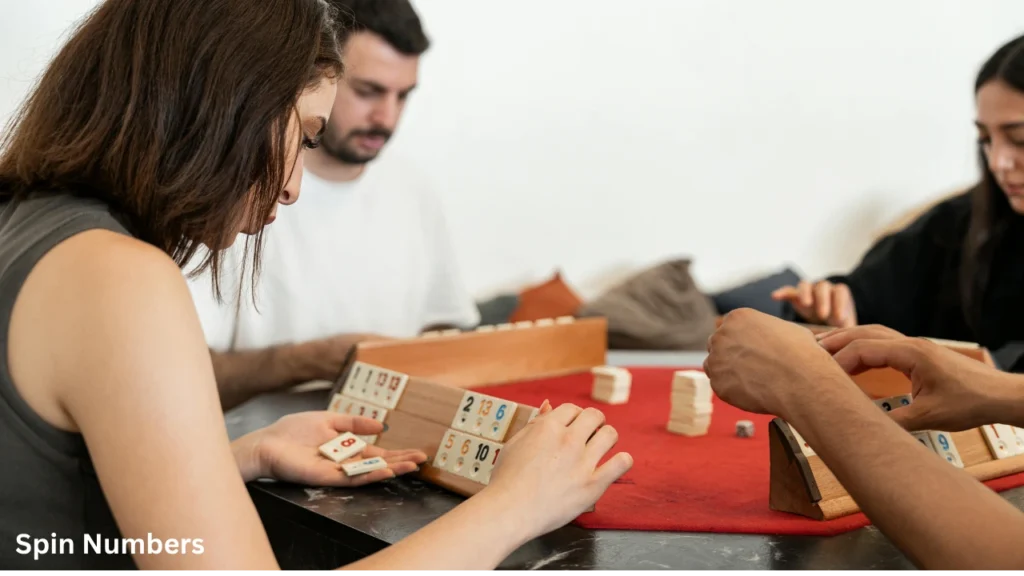
Subject-Specific Notes on Using Games in the Classroom
Primary school (K-5): Movement-based games and simultaneous-response formats work well because they match the physical energy and shorter attention spans of younger students. “Stand up if this is true” and rapid thumbs-up/thumbs-down activities produce total participation without the social risk of being singled out. Keep game sessions under eight minutes.
Secondary school (6-12): Older students respond to strategy-based games, debate formats, and collaborative challenges that treat them as capable of sophisticated reasoning. Games in the Classroom that feel designed for younger students produce disengagement and occasional resistance. The game format matters less than the intellectual level of the content it requires students to engage with.
STEM subjects: Games work particularly well for procedural review (mathematical operations, scientific processes, coding logic) where repetition is necessary and drill is tedious. The game format makes repeated practice feel different without changing the cognitive work the repetition requires.
Humanities and discussion-based subjects: Cooperative and debate-format games are more effective than competitive quiz formats in subjects where the goal is argumentation and interpretation rather than recall. A competitive quiz game in an English literature class rewards students who remember plot details but does not develop the analytical thinking the subject actually requires.
Common Mistakes When Using Games in the Classroom
Using games as a reward rather than a learning tool. “If we finish early, we can play a game” positions games as separate from learning rather than as a learning mechanism. Students learn that games are what you do when real work is done, which undermines the learning potential of game-based activities.
Introducing games without clear rules. Activities that take more than 20 words to explain, or that require multiple rule clarifications during play, lose student engagement before the game begins. Every game format used in a classroom should be explainable in a single sentence. If it cannot be, simplify the game or practice the explanation until it is that concise.
Not connecting the game outcome to a debrief. A game that ends with a winner and no discussion of what was learned misses the consolidation step that converts retrieval practice into long-term retention. A two-minute debrief after any game-based review activity (“What came up repeatedly? What surprised you? What do you need to look at again before the assessment?”) significantly increases the learning benefit of the session.
Running competitive games with unbalanced groups. A team that loses by a large margin early disengages. Random group formation, with names pulled from a spinner or draw tool, distributes ability more evenly than self-selection and produces more competitive, more engaging game dynamics.
Frequently Asked Questions
How often should I use games in the classroom?
There is no universal answer, but the novelty effect suggests that less frequent use produces stronger engagement. Using games deliberately for specific purposes, such as retrieval practice, vocabulary reinforcement, and collaborative problem-solving, is more effective than using them as a default format for any lesson. A practical guideline: one game-based session per week as a review tool, rotating the format monthly to maintain novelty.
Are digital games more effective than physical ones?
The format matters less than the design. Digital games that are well-designed around learning objectives outperform physical games with weak content integration, and vice versa. The research does not show a consistent advantage for either format independently of how well the game connects to its learning goals.
What types of games work best for older students?
Older students respond well to strategy-based games, debate formats, and collaborative challenges that treat them as capable of sophisticated thinking. Games that feel oversimplified or designed for younger learners produce disengagement rather than motivation in secondary and post-secondary settings. The intellectual level of the game content matters more than the format.
How do you handle students who do not want to participate in classroom games?
Some students find competitive or public game formats genuinely uncomfortable, and that discomfort is not always resolved by reassurance. Having a parallel individual task covering the same content ensures that opting out of the game format does not mean opting out of the learning activity. The goal is content engagement, not game participation for its own sake.
How do you prevent one team from dominating a competitive review game?
Random group formation is the most reliable prevention. When ability is distributed randomly across teams rather than through self-selection, which tends to cluster stronger students together, every team has a realistic mix. Additionally, scoring systems that award points for participation as well as correct answers, rather than only for correct answers, keep lower-performing teams engaged rather than demoralised.
Conclusion
Using games in the classroom is a tool, not a strategy. Like any tool, its effectiveness depends on how and when it is applied.
Used deliberately for retrieval practice, vocabulary reinforcement, cooperative problem-solving, and balanced team review, games in the classroom produce genuine learning benefits that other formats struggle to match. Used as a motivational add-on disconnected from content, they improve atmosphere without improving outcomes.
The question is not whether to use games in the classroom. It is whether the game you are planning requires students to engage with the content you want them to learn. If the answer is yes, the game belongs in the lesson. If the answer is no, direct instruction will likely serve the learning goal better.
A practical starting point: take one upcoming review lesson and replace the standard worksheet or question-and-answer session with a retrieval practice game where every student is selected randomly rather than by volunteering. Use a visible spinner to manage selection, debrief for two minutes at the end, and compare the participation rate to your previous review session. That single comparison will tell you more about the value of game-based activities in your specific classroom than any general recommendation can.
References:
Johnson, D. W., & Johnson, R. T. (1989). Cooperation and competition: Theory and research. Interaction Book Company.
Nation, I. S. P. (2001). Learning vocabulary in another language. Cambridge University Press.
Plass, J. L., Homer, B. D., & Kinzer, C. K. (2015). Foundations of game-based learning. Educational Psychologist, 50(4), 258-283. https://doi.org/10.1080/00461520.2015.1122533
Roediger, H. L., & Butler, A. C. (2011). The critical role of retrieval practice in long-term retention. Trends in Cognitive Sciences, 15(1), 20-27. https://doi.org/10.1016/j.tics.2010.09.003