By Spin Numbers · Jun 2026
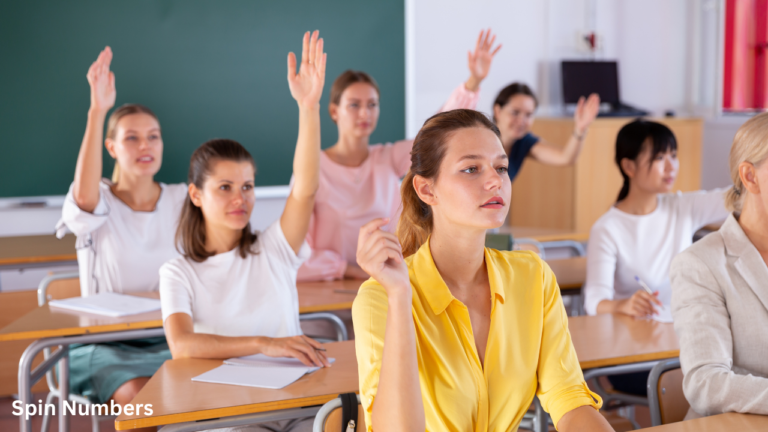
Random selection is one of the most practical and research-supported tools available for fixing one of the most persistent problems in classroom teaching. In most classrooms, the same students get most of the participation opportunities, not because teachers intend it that way, but because the default systems of hand-raising, volunteering, and informal selection naturally favor students who are already confident, engaged, and visible. The students who most need opportunities to demonstrate what they know are often the ones least likely to get them under these conditions.
This guide explains why the participation gap exists, what the research shows about how to address it, and how to implement random selection in a way that produces genuine equity rather than the appearance of it.
Table of Contents
The Participation Gap and Why It Matters
The participation gap in classrooms is well documented. Research by David Sadker and Karen Zittleman, published in “Still Failing at Fairness” (2009), found that participation in typical classrooms is heavily skewed toward a small group of students. In observed classrooms, fewer than one-third of students accounted for the majority of exchanges with teachers.
This gap is not random. It correlates with confidence, social status within the peer group, and prior academic performance. Students who have experienced success in a subject participate more. Students who have experienced difficulty participate less, which means they receive fewer opportunities to practice the skills they most need to develop.
Over a school year, this compounds. Students who participate regularly build fluency in expressing their thinking. Students who rarely participate miss that practice, which affects their performance in assessments, presentations, and any collaborative setting that requires articulating ideas clearly.
The participation gap is not only an equity concern. It is a learning efficiency concern. A classroom where participation is concentrated in a few students is a classroom where most students receive passive instruction for most of the lesson. Passive instruction produces lower retention than active retrieval practice, and the students receiving the most passive instruction are already the ones with the most ground to make up.
Why Random Selection Addresses This Directly
Random selection removes the factors that drive unequal participation by replacing teacher judgment with an impartial process.
When a teacher selects students manually, unconscious patterns shape those selections. Research by Tom Good and Jere Brophy, documented across multiple editions of “Looking in Classrooms,” identified systematic differences in how teachers interact with high-expectation and low-expectation students. High-expectation students receive more opportunities to respond, more wait time after questions, and more follow-up questions that push them to extend their thinking. Low-expectation students receive less of all three.
These differences are not deliberate. Teachers who are made aware of them are often surprised. But they persist across classrooms and grade levels because they are driven by cognitive shortcuts that operate below conscious awareness. A teacher who genuinely intends to distribute participation equally will still show this pattern under observation if they are relying on informal selection.
A random selection tool bypasses this entirely. The tool has no expectation of any student. It selects from the full pool with equal probability on every spin. A student who has never been called on has the same probability of selection as one who answers every lesson.
What Equal Opportunity Actually Looks Like in Practice
Equal opportunity to participate looks different depending on the student, and recognising this changes how teachers interpret what they see when random selection works.
For a high-performing student called on randomly, the outcome typically confirms what the teacher already knew. The value of the random process for this student is that it normalises being called on for everyone, not that it reveals hidden competence.
For a student who rarely volunteers, the dynamic is different. Consider a student in a Grade 6 science class who has been quiet for most of the term. Random selection calls on her during a discussion about ecosystems. She gives an answer that connects the concept to something she observed at home. The class hears an insight the teacher had not thought to introduce. The student experiences herself as someone who contributed something valuable. Both of these effects persist beyond the moment.
For students who struggle academically, random selection creates practice opportunities that would not otherwise reach them. A student who does not know a complete answer but can identify what they do know is still developing the skill of articulating partial understanding. That skill matters in assessments, in collaborative work, and in any professional setting that requires verbal communication under uncertainty.
The pattern teachers most often report is that random selection reveals competence that informal selection had made invisible. Students who do not raise their hands are not always students who do not know the answer. They are often students who have learned that the answer will come from someone else before they need to produce it.

How to Implement Random Selection Effectively
Use a visible tool
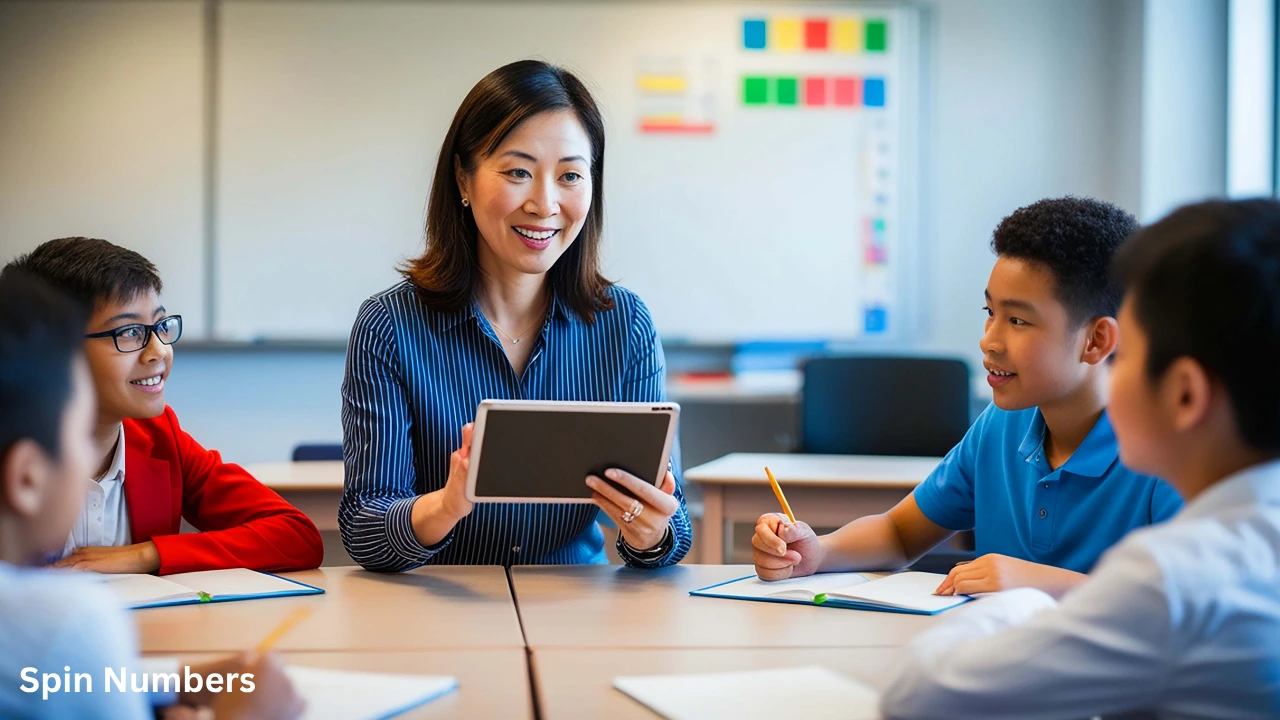
The selection tool needs to be seen by the class, not just the teacher. When students watch a wheel spin and stop on a name, they experience the selection as genuinely impartial. There is no moment where a student can reasonably suspect the teacher chose them for a specific reason.
Several browser-based spinner wheel tools allow you to enter student names, display the wheel on a classroom screen, and spin after posing a question. Wheelofnames.com and Pickerwheel.com are free, require no account for basic use, and work on any device. For a complete breakdown of which technical features matter most during a live session, you can read our practical guide on using spinner wheels effectively.
Display the wheel on a projector or classroom screen for every spin. The social value of the process comes from its transparency. A result the class cannot see undermines the fairness effect.
Apply wait time before spinning
Ask the question first. Give the class at least three seconds of silence before spinning the wheel. This ensures every student has processed the question and formed at least a partial response before anyone is selected.
Mary Budd Rowe’s research on wait time, published in the Journal of Research in Science Teaching (1974 and 1986), found across hundreds of classroom observations that extending the pause between question and selection to three seconds or more significantly improved the length, accuracy, and complexity of student responses. The effect held across age groups and subjects. The pause is not dead time. It is processing time. Three seconds of silence after a question is one of the most cost-free improvements available to any teacher.
Respond to all answers in the same way
The way a teacher responds to answers signals whether random selection is safe or carries social risk. If correct answers receive praise and incorrect answers receive visible disappointment, students learn that being selected carries real consequences.
Effective responses to incorrect or incomplete answers treat them as steps in the thinking process. “Interesting. Can anyone build on that?” or “You are on the right track. What would change if we considered X?” keeps the conversation moving without signaling that the selected student failed. The specific language matters less than the consistent principle: every answer is acknowledged as part of the thinking process, not evaluated as a performance.
This response pattern is the most important factor in whether students experience random selection as threatening or as routine. A teacher who responds identically to correct and incorrect answers creates a classroom where being selected does not feel like a test.
Track selections across two-week periods
Random processes produce uneven distributions in the short term. Over ten to fifteen individual spins, it is statistically expected that some students will have been selected multiple times while others have not been selected at all. This is normal variation, not bias. Over longer periods, the distribution evens out.
The practical implication is that a single lesson’s distribution is not meaningful data. Two weeks of lessons is.
A simple tracking method: at the end of each lesson, put a tick next to each student’s name on your printed class list for every time they were selected. At the end of two weeks, review the list. Students with no ticks have not been selected in that period. This does not necessarily indicate a problem, but it is useful to know.
When you notice a significant gap, two interventions are available. The first is to add that student’s name to the wheel multiple times in the next session to increase their probability of selection. The second is to check whether the student was absent on days their name may have appeared. Absence explains many apparent gaps.
The tracking takes thirty seconds per lesson and produces two weeks of data you can actually use. The goal is not administrative precision. It is noticing when a student has effectively disappeared from your questioning pattern, even when the tool is selecting randomly.

Extending Random Selection Beyond Question and Answer
Random selection produces more equitable outcomes in several classroom contexts beyond whole-class questioning.
Presentation order. A random draw for presentation slots removes the anxiety of not knowing when you will present and ensures that early or late slots, which carry different social pressures, are not consistently assigned to the same students. Run the draw publicly at the start of the unit so every student knows their slot from the beginning.
Sharing student work. When teachers select work to share publicly, they tend to unconsciously choose the strongest examples. Random selection normalises variation in the classroom rather than holding up only exemplary work as the visible standard. Sharing a range of work communicates that the goal is participation in the process, not achieving the visible benchmark.
Assigning group roles. In structured group work with defined roles (discussion leader, recorder, timekeeper, reporter), random selection distributes leadership roles across the class rather than allowing them to default to the most confident students every session. Rotate roles randomly at the start of each group work session.
Presentation topic assignment. When some topics are more desirable than others, random assignment removes any suspicion that the teacher chose who got what. Spin publicly, record the results, and move on.
Addressing Common Concerns
What if the selected student genuinely does not know the answer?
This is part of the process, not a problem to be avoided. “I am not sure” is a valid response. Follow it with a prompt (“What do you know about this topic?”), open the question to the class, or use it as a teaching moment about what the question is actually asking. The goal of random selection is not always a correct answer. It is consistent engagement with the material by all students.
What about students with anxiety or specific learning needs?
This concern covers very different situations that require different responses.
General nervousness about being called on is normal and decreases significantly within two to three weeks when the classroom response to answers is consistently safe. Most students who express initial reluctance are responding to the unfamiliarity of the expectation, not to clinical-level distress. Consistency in how answers are received matters more than anything else for this group.
Students with documented social anxiety disorder, selective mutism, or IEPs that address verbal communication present a different situation. Consult the student’s support plan first. The random selection process can usually be adapted rather than removed. Options include: giving the student advance private notice of the question you plan to ask them; allowing a written response instead of a verbal one; pairing them with a partner for joint responses; or agreeing on a private signal that means “I need to pass today.” Each of these preserves the student’s inclusion in the participation structure while reducing unexpected exposure. The goal is not to protect students with anxiety from participation. It is to ensure the conditions of participation are ones they can manage, with the expectation that those conditions can become less restrictive over time.
Will students resent being called on randomly?
Initial resistance is common when the practice is new. It typically decreases within two to three weeks as students experience that the process is fair and that the classroom response to their answers is safe. Frame the tool as a fairness mechanism from the first day you use it: “Everyone has an equal chance to contribute, and this is how I make sure that actually happens.” Most students accept this framing, particularly once they have watched several peers be selected and treated the same way.
Comparison: Random Selection vs. Other Participation Approaches
| Method | Equity | Transparency | Student anxiety level | Evidence base |
|---|---|---|---|---|
| Hand-raising (volunteer only) | Low (favors confident students) | Low | Low for volunteers, high for non-volunteers | Sadker and Zittleman (2009): participation concentrated in minority |
| Round-robin (fixed order) | Medium (predictable coverage) | High | Medium (students know when they are next) | Limited; predictability reduces alertness |
| Teacher-directed cold calling | Variable (depends on teacher bias) | Low | High (feels targeted) | Good and Brophy: unconscious bias well documented |
| Random selection (visible tool) | High (equal probability) | High | Medium, decreasing with consistency | Supported by wait time research and participation equity research |
Frequently Asked Questions
How is random selection different from cold calling?
Cold calling refers to selecting students without the hand-raising cue. Random selection is a specific method of cold calling that uses an impartial tool rather than teacher judgment. The key difference is visibility. Students who watch a wheel spin and land on a name experience the selection as genuinely impartial. Teacher-directed cold calling can feel targeted even when it is not, because the selection mechanism is invisible to students.
Should I remove a student’s name after they are selected?
This depends on your goal. Removing names after selection ensures every student is called on before anyone is called on twice, which is useful within a single lesson. Keeping all names in the pool maintains equal probability on every spin, which is more practical for tracking equity across multiple lessons. For most classroom use, keeping names in the pool and tracking manually across two-week periods is the more sustainable approach.
Does random selection work for group discussions or only for individual questions?
It works for both. For group discussions, spinning to select the next speaker distributes participation more evenly than open discussion, where the same vocal students tend to dominate. For individual questions, it ensures the opportunity reaches students who would not have volunteered. The setup is the same in both cases. The difference is in how you frame the selection to the class.
How do I introduce random selection to students who are not used to it?
Frame it as a fairness tool from the start, before the first spin. Explain that the wheel means everyone has the same chance to contribute and that the same supportive approach applies to all answers, regardless of whether they are complete or correct. Run a short demonstration with a low-stakes question so students see the process before it matters. Most classes accept the system within the first session when the framing is clear and the first few responses are handled consistently.
What do I do if the same name comes up multiple times in one lesson?
Acknowledge it directly and matter-of-factly: “The wheel has landed on Mia again. Mia, you can respond or I can note it and we will make sure others get selected before returning to you.” This gives the student an out without making it a significant moment and signals to the class that the process is flexible within its fairness framework. Over many spins, repeated selections even out.
Conclusion
Random selection is not a complete participation strategy on its own. It is the mechanism that makes other participation strategies equitable.
Wait time produces better answers when every student knows they might be selected. Supportive responses to incorrect answers create a safe classroom when selection is not predictable. Tracking produces real equity data when the goal is genuine distribution rather than the appearance of it.
The research behind this approach spans decades and multiple research traditions: Rowe on wait time, Good and Brophy on differential teacher behavior, Sadker and Zittleman on the cumulative effect of participation gaps across a school year. What the research consistently shows is that the participation patterns in most classrooms are not the result of student ability or effort. They are the result of systems that reward visibility and confidence, and that concentrate opportunity in students who already have both.
Random selection changes the system. Not immediately, and not without the other components that make selection feel safe. But consistently and transparently, in a way that well-intentioned informal selection cannot match.
The practical starting point is simple: choose a visible tool such as Wheelofnames.com, ask the question before spinning, and respond to every answer as part of the thinking process. Do that consistently for four weeks, review your tracking data, and evaluate whether the participation pattern in your classroom has shifted. Most teachers who run this experiment do not return to hand-raising as their primary participation method.
References:
Sadker, D. and Zittleman, K. (2009). Still Failing at Fairness: How Gender Bias Cheats Girls and Boys in School and What We Can Do About It. Scribner.
Good, T. L. and Brophy, J. E. (2008). Looking in Classrooms. 10th edition. Pearson.
Rowe, M. B. (1974). Wait-time and rewards as instructional variables, their influence on language, logic, and fate control. Journal of Research in Science Teaching, 11(2), 81-94.
Rowe, M. B. (1986). Wait time: Slowing down may be a way of speeding up. Journal of Teacher Education, 37(1), 43-50.